Land Rover Discovery 4 Engine Issues That Can Reduce Performance
- Posted on January 12, 2026
- blogs
- By Administrator
- 5340 Views
The Land Rover Discovery 4 engine is known for strong torque, towing ability, and long-distance comfort, but its performance depends heavily on correct maintenance. Most issues affecting the 3.0 TDV6 and SDV6 diesel engines develop gradually and worsen when early warning signs are ignored. Key problem areas include timing chain wear, oil pump and oil pressure failure, EGR valve clogging, and turbocharger faults, all of which can cause noticeable power loss or serious internal damage.
Timing chain problems often begin with a cold-start rattle, rough idle, or reduced response, usually linked to stretched oil intervals or incorrect oil. Oil pump failure is more severe, as even brief oil pressure loss can damage bearings, making immediate shutdown essential if the warning light appears. EGR valve issues are common on short-run vehicles, leading to smoke, limp mode, and poor fuel economy, while turbocharger wear or actuator faults reduce boost and acceleration.
Consistent oil changes, correct specifications, quality parts, and early diagnostics are the most effective ways to protect Land Rover Discovery 4 engine performance. When faults occur, options range from targeted engine repair to fitting a reconditioned engine or replacement engine. With informed maintenance and specialist support, the Discovery 4 remains reliable, capable, and rewarding to drive.
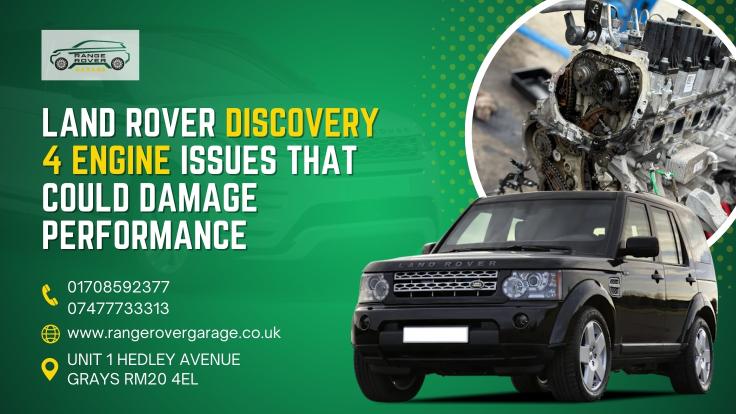
The Land Rover Discovery 4 engine is one of the reasons the “Disco 4” has become such a loved all-rounder: strong towing torque, confident long-distance cruising, and genuine off-road ability. But like any modern diesel drivetrain, it rewards owners who stay ahead of maintenance and it punishes neglect.
If you’re researching a Used Land Rover Discovery 4 engine (or you already own one), this guide covers the most common engine-related faults we see in workshops, the early warning signs, and what you can do to protect performance and avoid the worst-case scenario: major internal damage.
Note on scope: Discovery 4 is most commonly associated with the 3.0 TDV6/SDV6 diesel. Some information varies by model year, mileage, servicing history, and driving profile.
At-a-glance: the big Discovery 4 diesel risks
These are the problems most likely to cause noticeable performance loss or serious engine damage if ignored:
-
Timing chain wear / tensioner issues (often begins as a cold-start rattle)
-
Oil pump housing failure / low oil pressure (can be sudden and destructive)
-
EGR valve clogging (smoke, poor economy, limp mode)
-
Turbocharger wear or actuator faults (whistling, smoke, weak acceleration)
1) Timing chain problems
The timing system keeps crankshaft and camshaft movement perfectly synchronised. When the chain stretches or the tensioners/guides wear, valve timing can drift—hurting efficiency and power. In severe cases, it can lead to catastrophic contact inside the engine.
Early symptoms to watch for
-
Rattling/ticking from the front of the engine, especially on cold start
-
Rough idle or inconsistent throttle response
-
Noticeable power drop under load
-
Engine warning light (not always)
Why it happens
Timing components wear gradually, but the wear rate accelerates when oil quality drops or service intervals are stretched. Sludge and contamination can reduce tensioner performance and increase chain/guides wear.
What a Land Rover Discovery 4 engine specialist would recommend
-
Don’t ignore cold-start timing noises; diagnose early.
-
Use correct-spec oil and keep changes consistent.
-
If you’re buying, ask for evidence of oil-change frequency, not just the “book stamp.”
2) Oil pump failure
Oil pressure is life. On the TDV6 family, oil pump issues can be devastating because bearing surfaces don’t tolerate oil starvation even for a short time.
Warning signs (often minimal)
-
Oil pressure warning light
-
Sudden change in engine sound
-
Rapid loss of smoothness or power
If the oil pressure light appears, stop safely and shut down. Continuing to drive can damage crank bearings quickly.
Why it happens
A common issue is cracking or failure around the oil pump housing/casing area after repeated heat cycles and vibration—leading to a pressure drop.
Prevention that makes economic sense
Many owners and specialists choose proactive replacement during major scheduled work where access overlaps. It’s one of those upgrades that can cost far less than a Land Rover Discovery 4 replacement engine.
3) EGR valve problems
EGR systems reduce emissions by recirculating exhaust gases, but soot and carbon can clog the system especially on vehicles used mainly for short trips.
Symptoms of a clogged or failing EGR
-
Black smoke under acceleration
-
Hesitation, rough idle, or stalling
-
Reduced fuel economy
-
“Limp mode” activation (power restricted)
Diagnosis and realistic fixes
-
A proper scan can confirm EGR-related faults and related airflow issues.
-
Some cases respond to professional cleaning.
-
Heavily seized units usually need replacement.
Pro tip: Regular longer runs at operating temperature can help reduce carbon build-up. Also keep your DPF system healthy, DPF issues can increase soot load and worsen EGR clogging.
4) Turbocharger failure
The SDV6 setup delivers strong, usable torque, but turbos operate at extreme heat and speed. When lubrication is compromised or components wear, performance falls off fast.
Common turbo failure signs
-
High-pitched whine/whistle under boost
-
Blue smoke (possible oil burning)
-
Weak acceleration and delayed response
-
Inconsistent boost (often actuator-related)
What to ask when buying
If you’re considering a land rover discovery engine purchase (vehicle or engine), ask for:
-
Oil service history and correct oil spec usage
-
Any turbo replacement/repair documentation
-
Evidence of proper warm-up and cooldown driving habits
Turbo work can be labour-intensive on these platforms, so maintenance history matters.
Preventative maintenance that protects the best land rover discovery engine experience
If your goal is to keep the car feeling like the best land rover discovery engine you’ve driven, smooth torque, strong towing performance, and reliable daily use—your maintenance habits matter more than any single “upgrade.”
Practical habits that genuinely help
-
Oil & filter consistency: Don’t stretch intervals. Clean oil supports timing components, turbo bearings, and overall longevity.
-
Quality parts only: OEM or proven high-quality alternatives reduce repeat failures.
-
React early to symptoms: New noises, smoke, warning lights, or leaks are your early escape hatch from major bills.
-
Use specialists when it matters: A general garage can be great, but complex platforms benefit from a Land Rover Discovery 4 engine specialist who knows the common failure patterns.
If you’re searching “Land Rover Mechanic Near Me,” choose a shop that can show recent Discovery/Range Rover diesel experience and has diagnostic capability beyond generic code readers.
What if the engine is already damaged?
Not every issue means the vehicle is finished. Depending on the failure type and how quickly it’s addressed, you may have several options:
Option A: targeted Land Rover Discovery 4 engine repair
A properly scoped Land Rover Discovery 4 engine repair can be the most cost-effective route when damage is limited (for example, early timing-related repairs, EGR replacement, turbo issues caught before debris contamination, etc.).
Option B: replacement with a reconditioned unit
When internal damage is extensive, some owners choose a Land Rover Discovery 4 reconditioned engine or other Land Rover Reconditioned Engines solution. If you’re considering a Land Rover Recon Engine (also called a Land Rover Recon Engine option by some suppliers) ask what “reconditioned” includes bearings, chains, oil pump, turbo health checks, injectors, and warranty terms.
Option C: full swap
If the existing engine is beyond economical repair, a Land Rover Discovery 4 replacement engine may be the cleanest path back to reliable running especially if the vehicle is otherwise excellent.
How Discovery 4 diesels differ from Land Rover Ingenium Engines
People often group modern Land Rover powerplants together, but Land Rover Ingenium Engines are a different family from the Discovery 4’s TDV6/SDV6 era diesels. Some maintenance principles overlap (oil quality, cooling system health, correct servicing), but the common failure patterns are not identical so be careful when reading generic “Land Rover diesel” advice online.
Range Rover & Discovery workshop note
Many specialists who handle range rover discovery repair work see the same root causes repeatedly: stretched service intervals, incorrect oil, ignored warning signs, and “cheap fixes” that don’t address the underlying problem. Get the diagnosis right, fix the cause, and these vehicles can be excellent long-term owners’ cars.
Quick buyer checklist (used Discovery 4)
If you’re buying and the seller claims the land rover discovery 4 engine is “perfect,” verify it:
-
Cold-start listen test (timing rattle/tick)
-
Scan for stored faults (EGR/airflow/boost/DPF)
-
Check service invoices for oil type and frequency
-
Inspect for smoke under load and boost consistency
-
Confirm any major work (timing, oil pump, turbo) with documentation
Conclusion
The Discovery 4 remains a brilliant SUV when maintained properly. The key is respecting what these diesels need: clean oil, correct diagnosis, and early intervention. Whether you’re maintaining your current vehicle or evaluating a Used Land Rover Discovery 4 engine setup for a project, the smartest approach is to treat small symptoms as early warnings, not background noise.
If you need expert support, look for reputable Land Rover Repairs providers and choose a proven specialist for engine-related work—especially when performance changes appear.
FAQS
1) What are the most common Land Rover Discovery 4 engine problems?
The most common Land Rover Discovery 4 engine issues are timing chain rattle, oil pressure/oil pump failures, EGR valve clogging, and turbocharger faults causing power loss.
2) What does a timing chain rattle sound like on a Discovery 4 diesel?
A worn chain/tensioner often sounds like a metallic rattle or ticking on a cold start. If it repeats, book a Land Rover Discovery 4 engine specialist fast.
3) What should I do if the Discovery 4 oil pressure warning light comes on?
Stop safely and switch off immediately. Driving on low oil pressure can destroy the engine. Arrange engine diagnostics as soon as possible.
4) Can EGR problems cause limp mode and black smoke on a Discovery 4?
Yes—EGR carbon build-up can trigger black smoke, poor fuel economy, rough running and limp mode. A scan confirms faults and guides about engine repair.
5) What’s the difference between a Used Land Rover Discovery 4 engine and a reconditioned/recon engine?
A Used Land Rover Discovery 4 engine is removed from a donor vehicle; a Land Rover Recon Engine should be rebuilt to a stated standard—check what’s replaced and warranty terms.