3.0 TDV6 Crankshaft Failure: Causes, Warning Signs and Repair Options
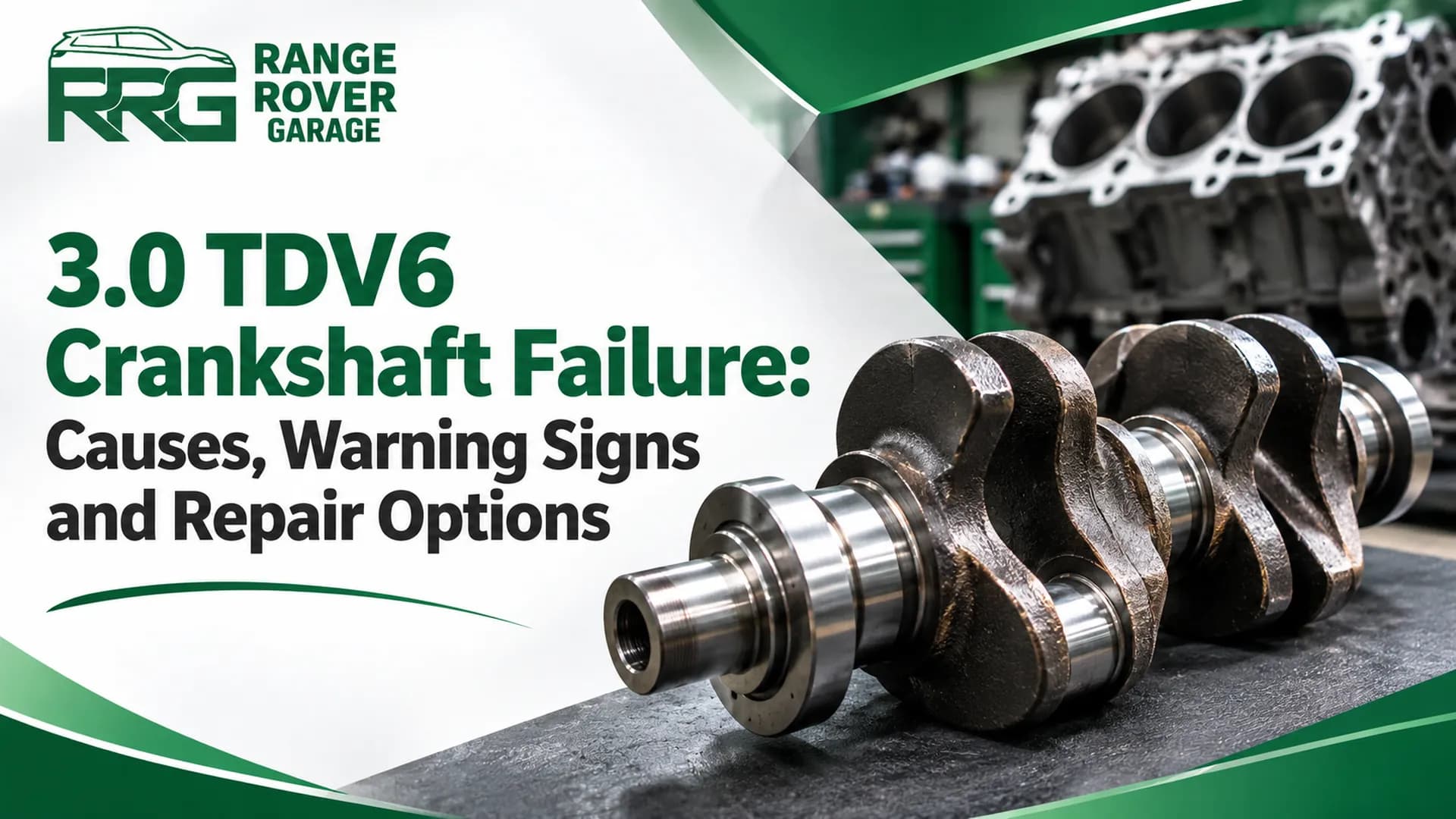
A deep knock from the bottom of the engine. An oil pressure warning that flashes up on a motorway slip road. Or a Discovery 4 that simply goes quiet and refuses to restart. If you are reading this, one of those moments has probably happened to you, and the next question is always the same: is the engine finished?
Not always. 3.0 TDV6 crankshaft failure on the 306DT engine usually begins at the main bearing shells, long before the crankshaft itself is in serious trouble. The earlier the engine is inspected, the more repair options stay open to you. Wait, and those options shrink fast.
At Range Rover Garage, we deal with Land Rover diesel engine faults every week, and the pattern is consistent. Owners who stop driving at the first knock often keep a repair or rebuild on the table. Owners who carry on for another few hundred miles often face a replacement engine. This page explains what causes the failure, how to recognise it, how specialists diagnose it and what your realistic options are.
Hearing a knock right now? Send us your registration, model and a short description of the symptoms, and we will arrange a specialist assessment.
What Causes 3.0 TDV6 Crankshaft Failure, and What Are the Warning Signs?
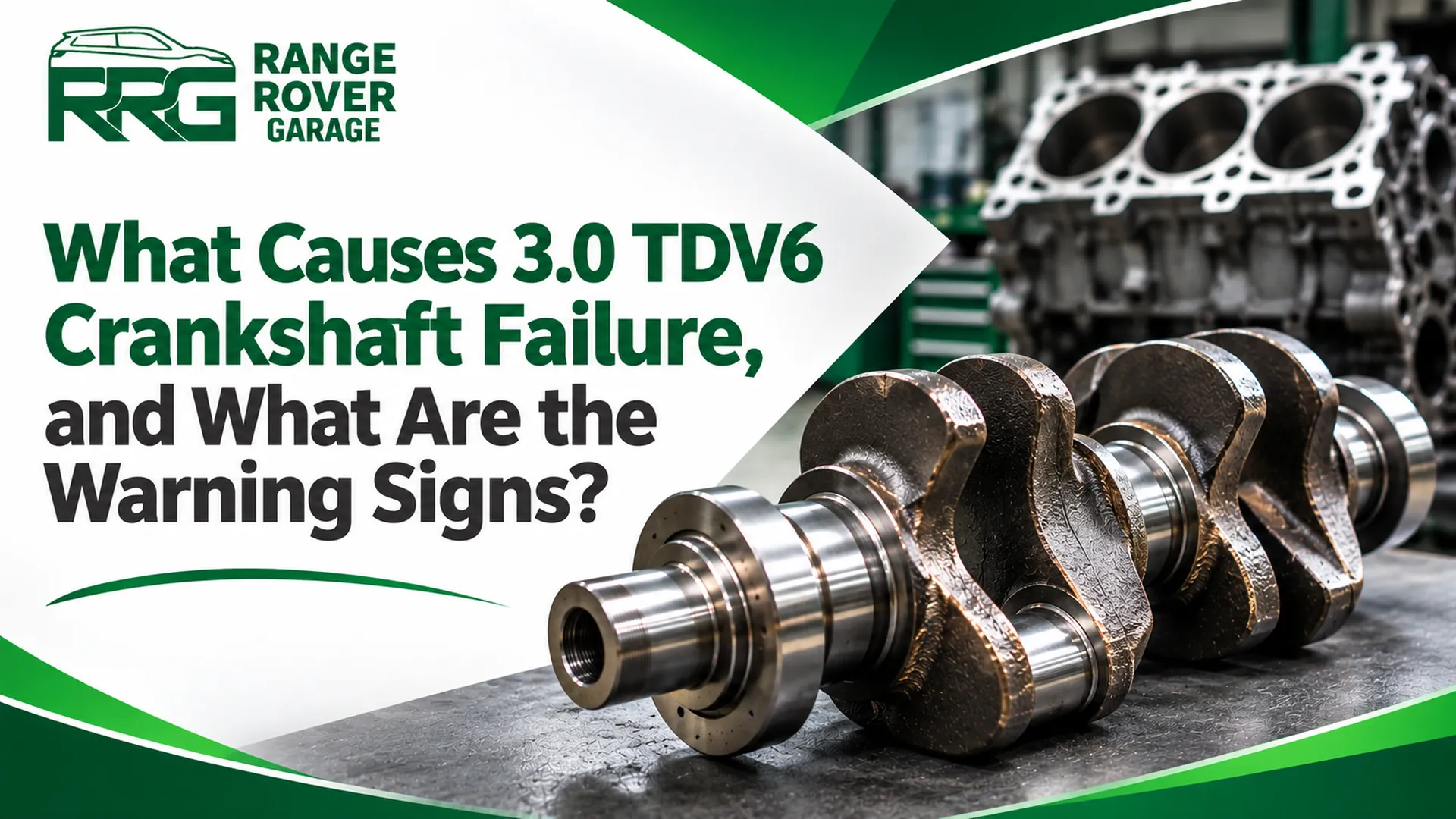
Crankshaft failure on the Land Rover 3.0 TDV6 is rarely a sudden event. In most cases it develops from main bearing shell rotation and lubrication problems, and it announces itself through knocking, rumbling and oil pressure warnings.
It helps to know what the crankshaft actually does. It turns the up-and-down movement of the pistons into the rotation that drives the vehicle. It spins on main bearings, which are thin shells sitting between the crankshaft journals and the engine block. A film of pressurised engine oil keeps those surfaces apart. When that film breaks down, metal meets metal, and the damage begins.
Here are the warning signs owners most often describe.
- A deep knock from the bottom end of the engine. It is often heard on a cold start, at idle or when the engine is warm, and it does not behave like a normal diesel clatter.
- A loud rumble under acceleration. The noise worsens as engine load increases.
- An oil pressure warning light. It may flicker at idle or stay on under load.
- Metallic debris in the engine oil. Glittering particles on the dipstick or in the drained oil point to internal wear.
- Sudden seizure. The engine stops turning and will not restart.
These signs matter because each one tells you something different. A knock suggests clearance has opened up between a bearing and its journal. A rumble under load suggests the problem is progressing. Metal in the oil means material is already being shed. Seizure means the damage has reached its final stage.
Why Does the Land Rover 3.0 TDV6 Crankshaft Fail?
Land Rover itself has acknowledged the problem. Its special service message SSM71816 identifies two linked causes: main bearing shells that were incorrectly positioned during assembly, and shells that rotate in their housings during normal use. A later message, SSM72578, deals specifically with main bearing shell rotation on the 3.0 TDV6.
Once a shell rotates, it blocks the oil passages that feed the bearing. The crankshaft journal is then starved of lubrication, friction and heat build up, and the bearing surface breaks down. Low oil pressure often follows, and that makes everything worse.
Other factors can speed the process up.
- Oil pressure problems. A tired oil pump, a blocked pickup or restricted oil galleries reduce the oil reaching the bearings.
- Poor lubrication practice. Incorrect oil specification, long service intervals and contaminated oil weaken the protective film.
- Excessive friction and heat. Bearing overheating softens the bearing material and accelerates wear.
Not every problem is a snapped crankshaft, and this is where many owners and even some garages get confused. These are different faults with different outcomes.
Failure type | What happens | Typical consequence |
| Main bearing shell rotation | The shell spins in its housing and blocks oil flow | Journal damage, knocking, falling oil pressure |
| Big-end bearing failure | The connecting rod bearing wears or seizes | Connecting rod damage, loud knock, possible block damage |
| Crankshaft journal scoring | Grooves cut into the journal surface | Regrinding needed, or a new crankshaft |
| Crankshaft fracture | The crankshaft cracks or breaks | Sudden loss of power, often with wider internal damage |
| Complete seizure | Rotation stops entirely | Engine will not turn, often a full replacement |
Understanding the difference is useful because it shapes your options. Early bearing trouble can often be corrected. A fractured crankshaft with block damage usually cannot.
Can You Drive a Land Rover With a TDV6 Engine Knocking?
No. If the engine has a persistent bottom-end knock, a rumble under load or an oil pressure warning, stop driving and get it inspected.
Here is why. Every mile on a failing bearing turns a small repair into a bigger one. A worn shell becomes a scored journal. A scored journal becomes a damaged bearing housing. A damaged housing becomes a scrapped block, or a crankshaft that breaks under load.
If it happens on the road, follow these steps.
- Pull over safely and switch the engine off as soon as you can.
- Do not restart it to see whether the noise has gone.
- Check the oil level once the engine has cooled.
- Arrange recovery to a specialist rather than driving it in.
One more point worth knowing: a basic OBD diagnostic scan cannot confirm or rule out mechanical crankshaft damage. A scanner reads electronic faults. Bottom-end bearing damage is a mechanical problem and needs physical inspection.
A scenario we see often: an owner notices a faint knock on cold starts, assumes it is a diesel injector and keeps driving for a few weeks. By the time the oil pressure light appears, the journals are scored and the repair options have narrowed. Stopping at the first knock would have left far more choice.
Do not gamble with the bottom end. Book a TDV6 engine inspection with Range Rover Garage before the damage spreads.
Can a 3.0 TDV6 Crankshaft Be Repaired, or Does the Engine Need Replacing?
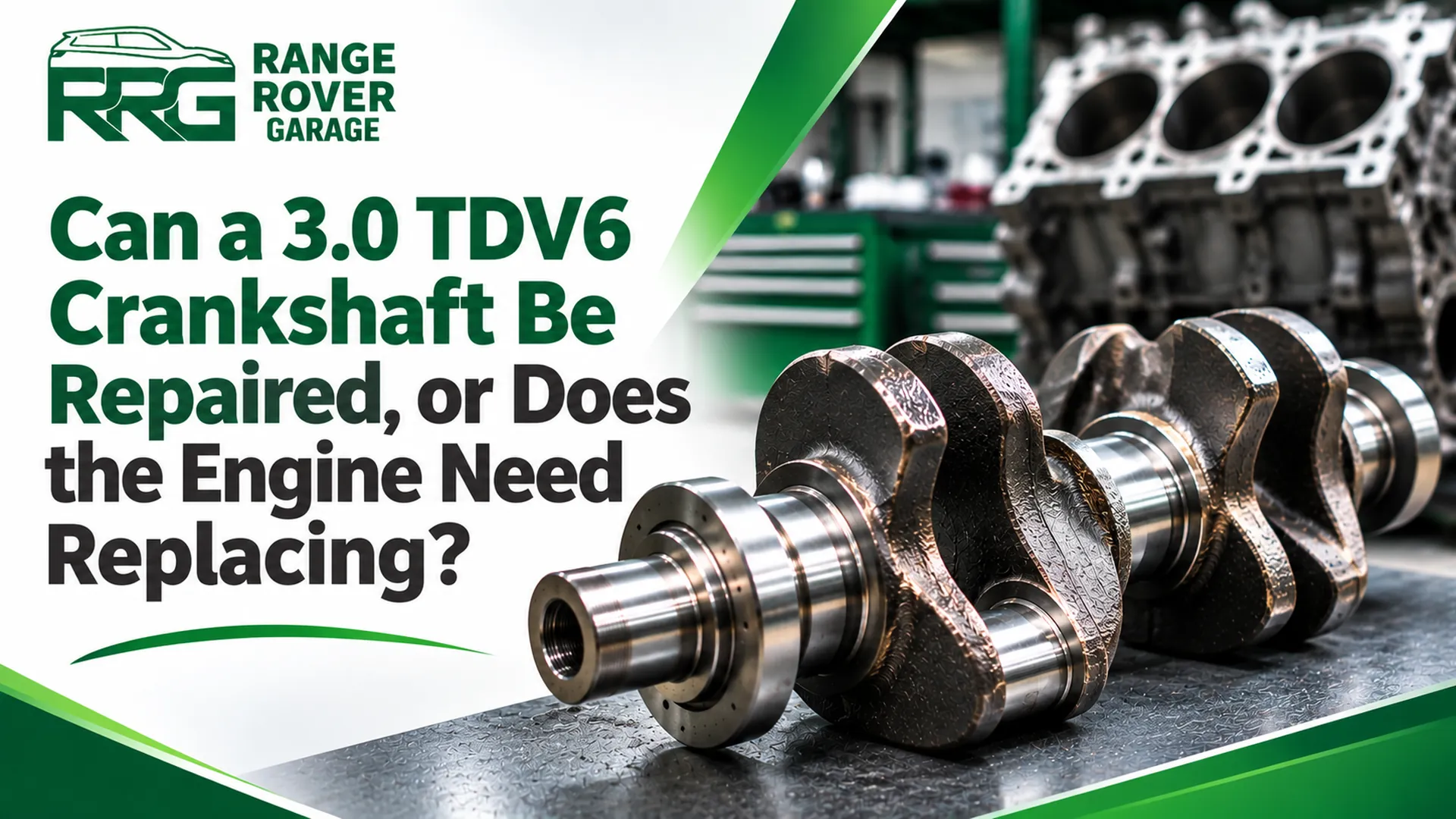
Sometimes the crankshaft can be repaired. Whether it can depends on the condition of the crankshaft journals, the bearing housings and the engine block, and only a proper strip-down confirms the answer.
Some websites suggest every crankshaft failure ends in a new engine. Others suggest every one can be repaired. Neither is accurate. The honest answer sits in between, and it depends on how far the damage has travelled.
Damage condition | Likely solution |
| Early bearing wear | Inspection and preventative bearing replacement |
| Worn but serviceable journals | Crankshaft regrinding and new bearings |
| Journals beyond machining limits | Crankshaft replacement |
| Damaged bearing housings or block | Specialist block repair or engine replacement |
| Fractured crankshaft with extensive internal damage | Usually complete engine replacement |
Read that table from top to bottom and a clear pattern appears. Each step down involves more machining, more parts and more risk. The earliest intervention is nearly always the simplest.
How Do Specialists Diagnose TDV6 Crankshaft Failure Before Repairing It?
A responsible specialist diagnoses first and quotes second. That way you pay only for the work your engine actually needs. A proper diagnostic progression looks like this.
- Listen for abnormal knocking. The sound, its timing and its behaviour under load all provide clues.
- Check the oil pressure warning. Its pattern shows whether lubrication is failing at idle, under load, or both.
- Inspect the oil condition. Contamination, fuel dilution and metal particles each tell a different story.
- Check the sump for metallic debris. Bearing material in the sump confirms internal wear.
- Carry out professional oil pressure testing. Measured pressure shows whether the pump, the galleries or the bearings are at fault.
- Strip the engine if the evidence warrants it. Only then can the damage be seen directly.
- Measure the crankshaft journals and inspect the bearing housings. Journal wear, runout and housing condition decide between regrinding, replacement and a different route altogether.
Each stage either confirms the suspected fault or rules it out. That is what separates a considered diagnosis from a guess, and it protects you from paying for a repair the engine does not need.
Is Repairing, Rebuilding or Replacing a TDV6 Engine the Better Choice?
There is no single right answer. The best route depends on the damage, the condition of the vehicle and what you want from it afterwards. Here is how the main options compare.
Option | What it involves | Where it makes sense |
| Crankshaft repair | Regrinding, new bearings, oil pump and related parts | Serviceable crankshaft and sound block |
| Full engine rebuild | Complete strip-down, machining and reassembly with new components | Wider wear or damage, but a sound block |
| Reconditioned engine | A rebuilt unit supplied and fitted with warranty | Repair is uneconomic, or time matters |
| Used engine | A second-hand unit of unknown history | Tight budgets, with the risks understood |
A reconditioned engine carries fewer unknowns than a used one. A used engine may have the same bearing weakness that caused your original failure, and you will not know until it fails. That is worth weighing carefully.
The cost of any route comes from the same set of factors, and a good quotation should list each one.
- Diagnosis and inspection. Confirming what has failed and how far it has spread.
- Engine removal and strip-down. Labour that applies to almost every repair route.
- Crankshaft machining. Regrinding the journals where they are serviceable.
- Replacement bearings. New main and big-end bearing shells.
- Oil pump replacement. Renewed where it may have contributed to the failure.
- Block inspection and cleaning. Removing debris and checking the bearing housings.
- Refitting and testing. Installing the engine and confirming correct oil pressure.
Ask any garage to itemise these lines. It makes quotes comparable and exposes anything quietly left out, particularly the oil pump, the cleaning and the oil system flush, which are the most common casualties of a low estimate.
Want it laid out clearly? Request an itemised TDV6 repair or reconditioned engine quotation from Range Rover Garage and see where every line of the work goes.
Which Vehicles Use the 306DT Engine, and How Do You Check Yours?
The 306DT 3.0 litre V6 diesel appears across several models, including these.
- Discovery 4, in 3.0 TDV6 and SDV6 form.
- Range Rover Sport, including the L320 and L494 generations, in 3.0 TDV6 and SDV6 form.
- Range Rover, in 3.0 diesel form.
- Jaguar models such as the XF, XJ and F-Pace in 3.0 V6 diesel form.
The Discovery 3 is worth a note. It used the earlier 2.7 TDV6, a different engine, so its problems should not be confused with the 306DT.
Engine variants and codes differ by model year, so always check the exact engine code against your VIN before any replacement engine is ordered. We do this for every vehicle we quote on. The 2.7 TDV6 and the Ingenium diesel engines are different designs, and their advice does not apply here.
How Can You Prevent TDV6 Bearing Failure, and Who Should You Trust to Repair It?
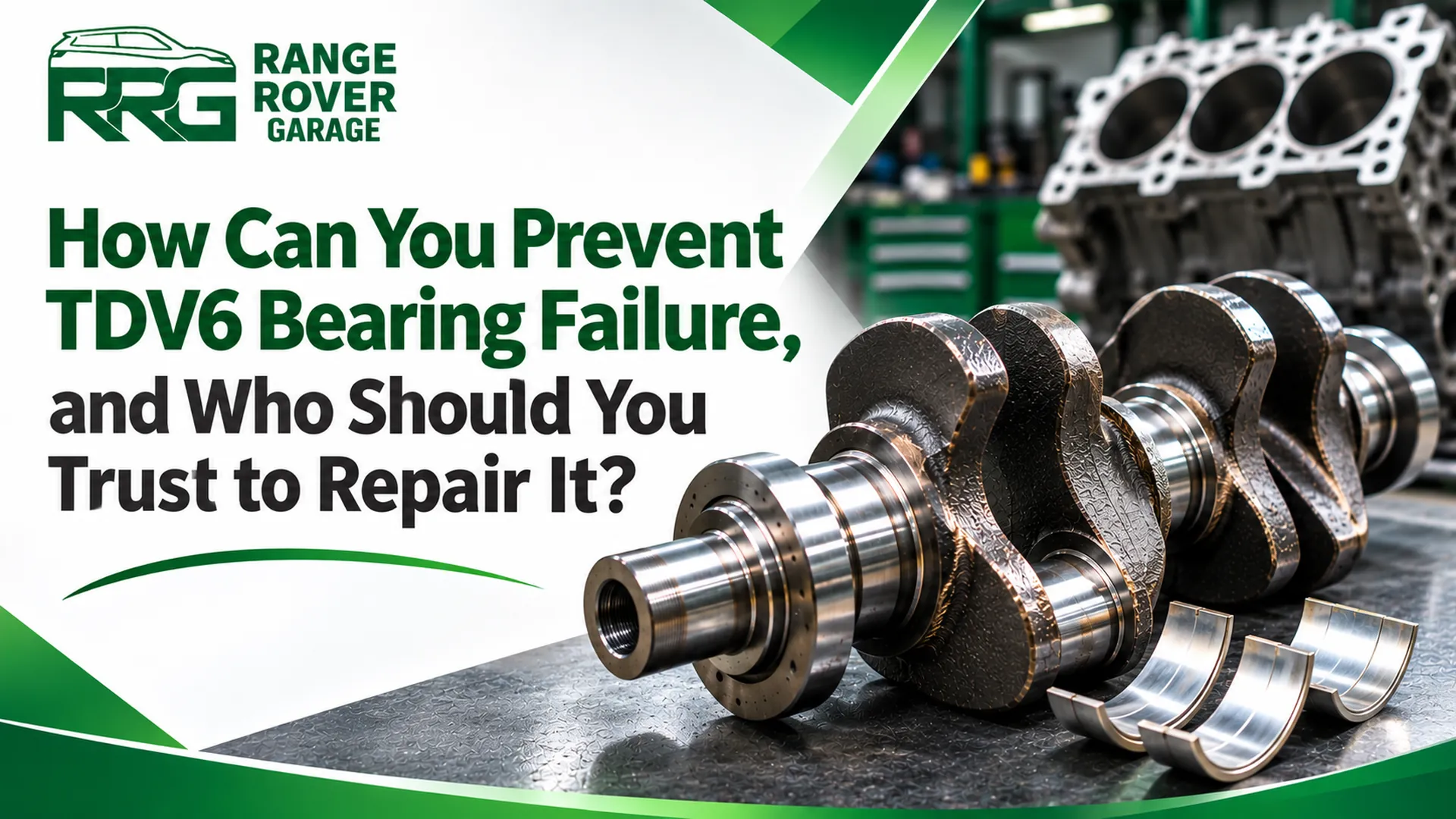
Three habits protect the bottom end better than anything else: use the correct oil specification, change oil and filter on time, and investigate any new engine noise immediately.
No habit guarantees a trouble-free engine, and no honest garage will tell you otherwise. But these steps reduce the stress on the bearings and give you early warning when something changes.
- Follow the correct oil specification. The right viscosity and quality maintain the protective film between bearing and journal.
- Keep regular oil and filter changes. Fresh oil carries fewer contaminants and holds pressure better.
- Watch the oil pressure. Any warning light, even a brief flicker, deserves attention.
- Investigate unusual noises. Knocking, rumbling and ticking from the bottom end should never wait for the next service.
- Keep a complete service history. It helps diagnosis, protects resale value and shows how the engine has been looked after.
If you are buying a used TDV6 vehicle, ask for that service history before anything else, and listen carefully to the engine from cold.
What Should You Look for in a Land Rover Engine Specialist?
Choosing who repairs your engine matters as much as the repair itself. A good specialist should offer the following.
- Engine-specific TDV6 experience. Familiarity with the 306DT, its bearing weakness and the service messages that describe it.
- A diagnosis-first approach. Inspection before quotation, not the other way round.
- Itemised quotations. Parts, labour and extras shown separately.
- Honest advice on repair, rebuild or replacement. Including when the right answer is the less profitable one for the garage.
- A written warranty. Clear terms on the parts and labour fitted, with the duration stated.
Photographs of damaged shells and crankshafts, a genuine repair example and verified customer reviews are also good signs. They show real work rather than marketing claims.
Ready for a Straight Answer About Your Engine?
A knocking TDV6 is stressful, but it does not have to end badly. The sooner a specialist looks at it, the more options you keep, whether that is a bearing repair, a crankshaft regrind, a full rebuild or a reconditioned replacement.
Send Range Rover Garage your registration, model, mileage and a short description of the symptoms. We will tell you what the engine needs, what it does not, and what to expect from start to finish.
You can also explore our engine rebuild service, our reconditioned engine options and our engine diagnostics page for more detail on each route.
Frequently Asked Questions About 3.0 TDV6 Crankshaft Failure
What are the symptoms of TDV6 crankshaft failure?
The most common signs are a deep knock from the bottom of the engine, a loud rumble under acceleration, an oil pressure warning light, metallic debris in the engine oil and, in the worst cases, sudden seizure.
Is 3.0 TDV6 crankshaft failure a common problem?
It is well enough known that Land Rover issued service messages about main bearing shell positioning and rotation on this engine. That said, not every 306DT engine fails, and no mileage guarantees a failure. Servicing and early attention to noises make a real difference.
What causes 3.0 TDV6 crankshaft failure?
Most cases trace back to main bearing shell rotation or incorrect shell positioning, which cuts off oil to the crankshaft journal. Lubrication problems, oil pressure faults and friction speed up the damage.
Can a spun bearing damage the engine block?
Yes. A spun bearing can score the crankshaft journal and damage the bearing housing. If the housing or block is damaged beyond repair, replacement is often the only practical route.
Can a TDV6 crankshaft be repaired?
Often, when the journals are serviceable and the block is sound. Regrinding and new bearings can restore the crankshaft. If journals are beyond machining limits, a replacement crankshaft is needed, and a fractured crankshaft with wider damage usually means a replacement engine.
Can you drive with a crankshaft knocking noise?
No. Continued driving can turn a bearing repair into a full engine replacement. Stop, switch off and arrange recovery to a specialist.
Is engine replacement better than rebuilding?
Neither is always better. A rebuild suits a sound block with repairable damage, while a reconditioned engine suits cases where repair is uneconomic or speed matters. Inspection gives the answer.
What is Land Rover's technical bulletin on TDV6 crankshaft failure?
Land Rover issued special service messages SSM71816 and SSM72578. They describe incorrectly positioned main bearing shells, shell rotation in normal use and the symptoms that follow, including knocking, rumbling, oil pressure warnings, metallic debris and seizure.