Discovery 4 Oil Cooler Failure: Symptoms, Diagnosis, Cost and Replacement Guide
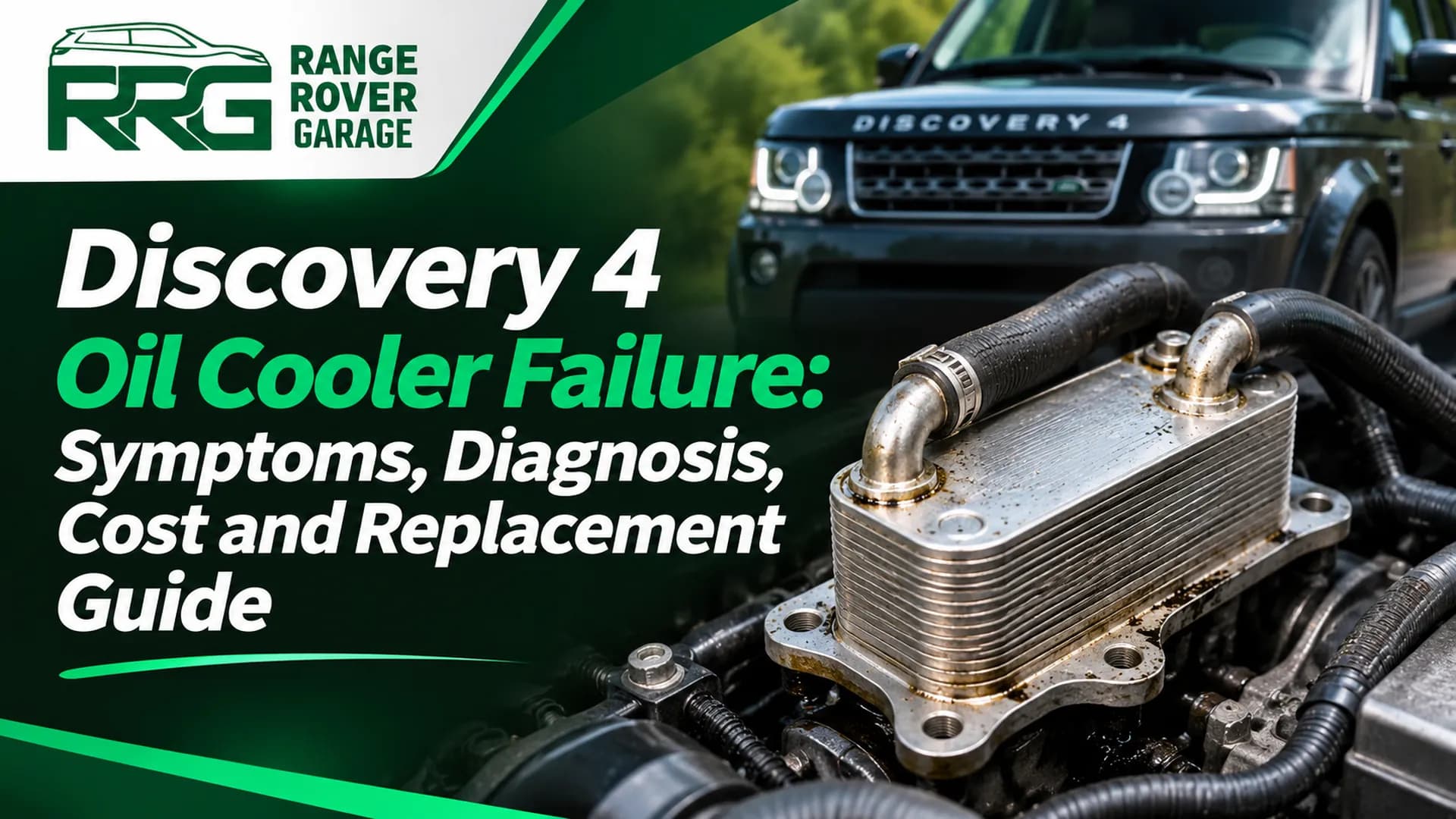
You top up the coolant, and a week later the level has dropped again. Then you spot a brown, oily film in the expansion tank, or the temperature gauge starts creeping higher than it should. That sequence is the classic signature of Discovery 4 oil cooler failure, and it deserves attention straight away.
The good news is that this is a well-understood fault. It can be repaired properly, and the earlier you act, the smaller the bill and the lower the risk to your engine. The bad news is that a leaking oil cooler can let oil and coolant cross-contaminate, and that shortens engine life if the car keeps being driven.
This guide covers the symptoms, how a specialist diagnoses the problem, what drives the cost of the repair, and how the replacement is carried out. It was prepared by the technical team at rangerovergarage.co.uk, drawing on day-to-day workshop experience with Land Rover diesel engines and on manufacturer technical documentation.
What Are the Symptoms of Discovery 4 Oil Cooler Failure?
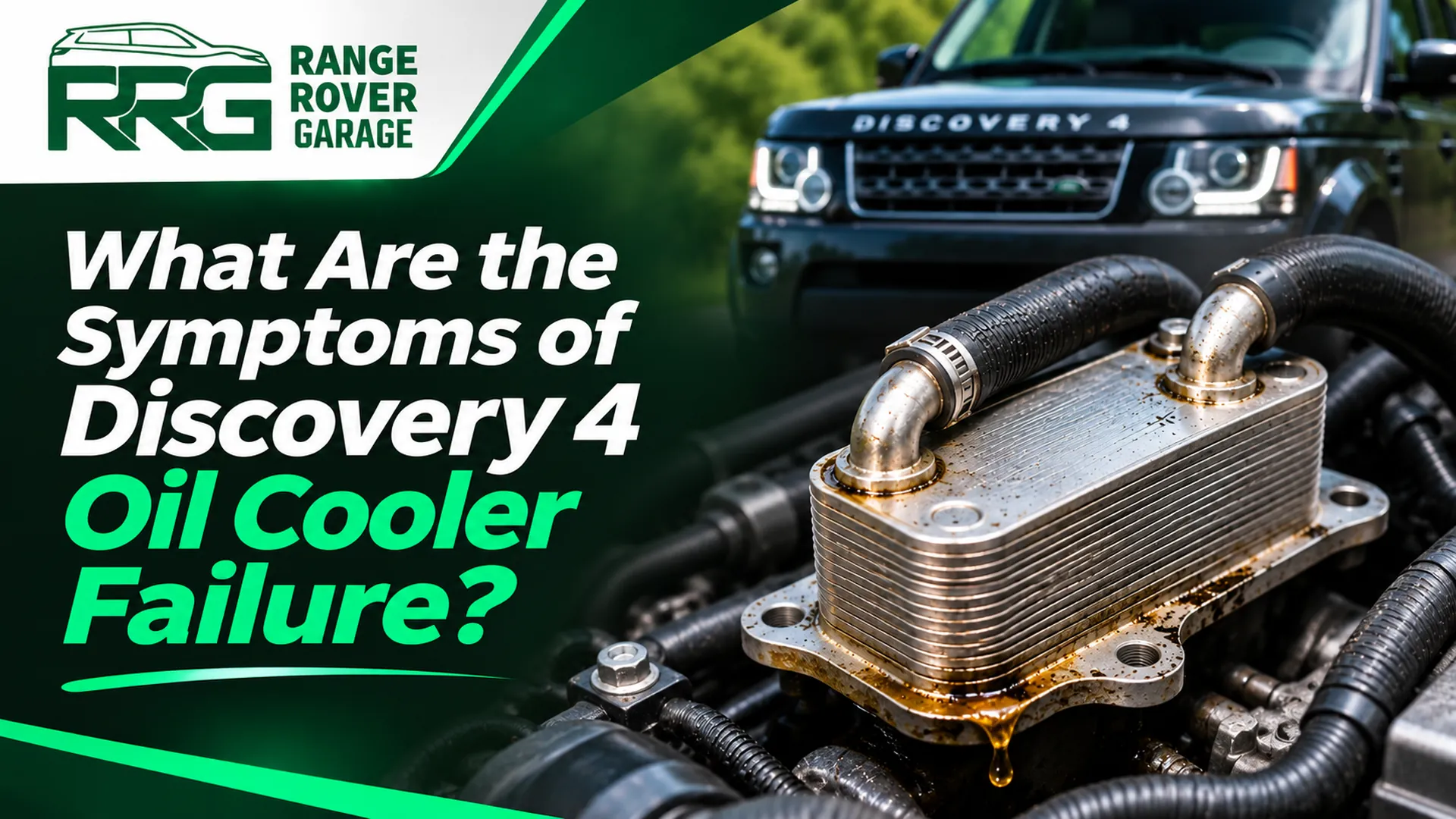
The most common signs are oil in the coolant expansion tank, a milky residue under the oil filler cap, coolant loss with no visible leak, overheating, and oil seeping around the engine. One symptom on its own does not prove the cooler has failed, but two or more together make it the prime suspect.
Here is what owners and technicians see most often on the 3.0 TDV6 and SDV6 diesel engines:
- Oil in the coolant expansion tank. A tan, brown or black film floating on the coolant is the clearest warning sign. It suggests oil is passing into the cooling circuit through the oil cooler matrix or its seals.
- Milky residue under the oil filler cap. A light, mayonnaise-like deposit can point to coolant getting into the oil. Short journeys in cold weather can cause some condensation, so judge this alongside the other signs.
- Unexplained coolant loss. If the level keeps falling and you cannot find a puddle or a wet hose, the coolant may be escaping internally.
- Engine overheating. Contamination and blocked passages reduce how well the cooling system carries heat away. A rising temperature gauge should never be ignored.
- Burning oil smell. Oil weeping onto hot components produces a sharp, acrid smell after a drive.
- Low oil pressure warning. This is serious. It can mean the oil is thinned, aerated or low.
- Oil pooling around the engine valley. A leaking oil cooler housing or seal can leave oil collecting in the vee of the engine, where it is easy to miss until the problem is advanced.
Why do these failures happen? In our experience the usual causes are ageing seals and gaskets, thousands of heat cycles, internal damage to the cooler, and corrosion over time. Poor previous repair work also plays a part. A cooler that was refitted without fresh O-ring seals or with dirty mating surfaces will often fail again.
A real-world scenario shows how this plays out. An owner notices the coolant level dropping every fortnight and keeps topping it up, assuming a small hose weep. Weeks later, the expansion tank shows a dark film and the oil on the dipstick looks lighter than it should. By then the oil and coolant have been mixing for some time, and the repair has grown from a cooler replacement into a full contamination clean-up. Catching the first sign is what keeps the cost down.
Why Is There Oil in My Discovery 4 Coolant, and Is It the Oil Cooler or the Head Gasket?
Oil in the coolant does not automatically prove a failed oil cooler or a failed head gasket. Both faults can produce very similar symptoms, which is why guessing is expensive. Here is how they compare:
Check | Oil cooler internal leak | Head gasket failure |
| Oil in coolant tank | Common | Possible |
| Coolant in engine oil | Possible | Possible |
| White exhaust smoke | Less common | More common |
| Cooling system pressurising | Less common | More common |
| Combustion gases in coolant | Not expected | Often present |
| Compression test result | Usually normal | May show loss on one or more cylinders |
| Cooler pressure test | Often shows a leak | Usually passes |
Because the symptoms overlap, a technician works through tests in sequence. A combustion gas test and a cylinder compression test help rule the head gasket in or out. A pressure test of the cooler and its seals confirms whether the cooler is the source.
One important point on engine types. Land Rover's AJ133 technical bulletin deals with oil and coolant cross-contamination on a petrol engine application. It is a useful reference, but it does not apply to the 3.0 TDV6 or SDV6 diesels. Mixing the two up is a common source of bad advice online.
Can You Drive a Discovery 4 With a Faulty Oil Cooler?
The honest answer is no, or only as far as a safe place to stop or the workshop. Driving on a leaking cooler risks the engine's lubrication system, and the damage is not always reversible.
Here is why it matters. Oil contaminated with coolant loses its ability to protect moving parts. Reduced lubrication increases the risk of wear on the crankshaft and main bearings, and that is the point where a repair becomes an engine rebuild or replacement.
Stop driving and arrange recovery if you see any of the following:
- The oil pressure warning light comes on.
- The oil on the dipstick or under the filler cap looks milky or frothy.
- The temperature gauge climbs beyond its normal position.
- The coolant tank shows a heavy oil film and the level is falling fast.
If you are unsure, a short, early diagnostic visit is far cheaper than a failed engine. At rangerovergarage.co.uk we can talk you through the safest next step and help you decide whether recovery makes sense.
How Do You Diagnose Discovery 4 Oil Cooler Failure on the 3.0 TDV6 and SDV6?
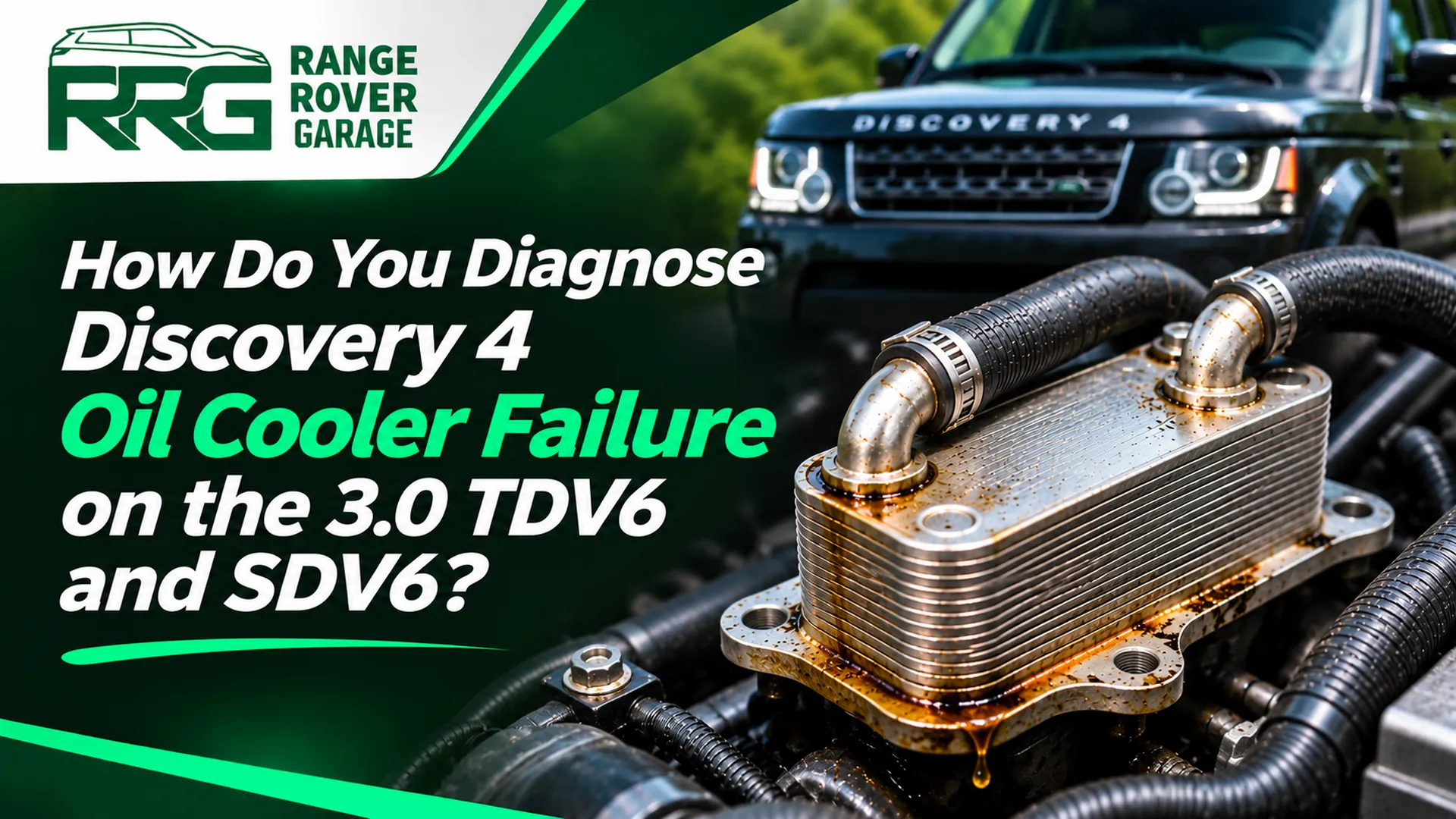
A proper diagnosis combines a visual inspection, fluid checks and pressure testing, so the real source of the problem is found before any parts are ordered. Replacing components on a hunch is the most common way owners end up paying twice.
First, it helps to know which engine you have, because Discovery 4 variants are not identical:
- 2.7 TDV6. Fitted to earlier Discovery 4 models, with its own cooler layout and known service points.
- 3.0 TDV6, engine code 306DT. The most common diesel in the range. The oil cooler and filter housing assembly is a recognised area of attention on these engines.
- 3.0 SDV6. A closely related development of the 3.0 diesel with a similar cooling and lubrication layout.
- Petrol V6 and V8 variants. Different cooler designs and different technical bulletins. Diesel repair information must not be applied to them.
Land Rover's own repair documentation, available to specialists through TOPIx, sets out the correct removal and installation procedure by engine. Following it matters, because the cooler's O-ring seals and mating surfaces are unforgiving of shortcuts.
In the workshop, a failed cooler often leaves a recognisable picture: a tide mark of oil in the coolant tank, a greasy film around the housing, and oil that has crept into hard-to-see areas of the engine valley. Before a repair begins, we photograph what we find so owners can see exactly what the problem looks like and what has been done about it.
How Do You Test a Discovery 4 Oil Cooler for Leaks?
A leak test follows a set order, moving from the simplest checks to the most conclusive. This is the sequence a competent specialist uses:
- Visual inspection. The technician checks the oil cooler housing, filter housing and surrounding area for fresh oil or coolant traces, including the engine valley.
- Coolant tank check. The coolant is inspected for oil film, brown sludge and an oily smell.
- Oil condition check. The dipstick and the underside of the filler cap are checked for milky residue, thinning or unusual level changes.
- Cooling system pressure test. The system is pressurised to see whether it holds, and where it loses pressure. UV leak detection dye can help trace slow weeps.
- Ruling out the head gasket. Combustion gas and compression tests separate a gasket fault from a cooler fault.
This staged approach matters because each result narrows the possibilities. Skipping straight to a replacement can leave the real fault untouched.
Could the Oil Leak Be Coming From Somewhere Else?
Yes, and this is one of the most frequent diagnostic traps on the 3.0 TDV6. Oil travels, so the wettest area is not always the source.
Common look-alikes include:
- Sump gasket leaks. Land Rover's technical communication SSM72983 specifically notes that some reported 3.0 TDV6 sump gasket leaks were incorrectly diagnosed, which shows how easily leaks are misread.
- Rear main seal leaks. Oil collects at the bellhousing and can be mistaken for a leak higher up.
- Rocker cover gasket leaks. Oil runs down the side of the engine and appears to come from lower components.
- Turbocharger oil feed and return pipe leaks. These can coat the engine valley in oil.
- Oil filter housing leaks. Closely related to the cooler assembly, but a separate sealing fault.
- Coolant outlet and pipe leaks. These cause coolant loss that can be mistaken for internal leakage.
A thorough leak trace means cleaning the area, running the engine, and watching where fresh oil appears first. It takes more time than a quick look, but it protects you from paying for the wrong repair.
What Should You Check Before Buying a Used Discovery 4 With Oil Cooler History?
Ask for paperwork first, then check the car for yourself. A Discovery 4 with a documented, correctly completed oil cooler repair can be a sensible buy. One with an unexplained history is a gamble.
Before you commit:
- Request repair invoices. Look for the work being done by a Land Rover speservices cialist, with new seals and gaskets listed.
- Check the coolant expansion tank. Any oil residue or brown sludge suggests either a new failure or a poor clean-up after an old one.
- Inspect the engine oil. It should look consistent, with no milky tint or signs of coolant.
- Ask whether the cooling system was flushed. Contaminated coolant left in the system can cause repeat problems.
- Look for external leaks around the engine valley and filter housing.
- Arrange a specialist pre-purchase inspection. It is a small cost against the potential of an engine repair.
A Discovery 4 that has had an ignored problem can hide serious internal wear, so lean towards caution if the history does not add up.
How Much Does Discovery 4 Oil Cooler Replacement Cost in the UK, and What Does the Repair Involve?
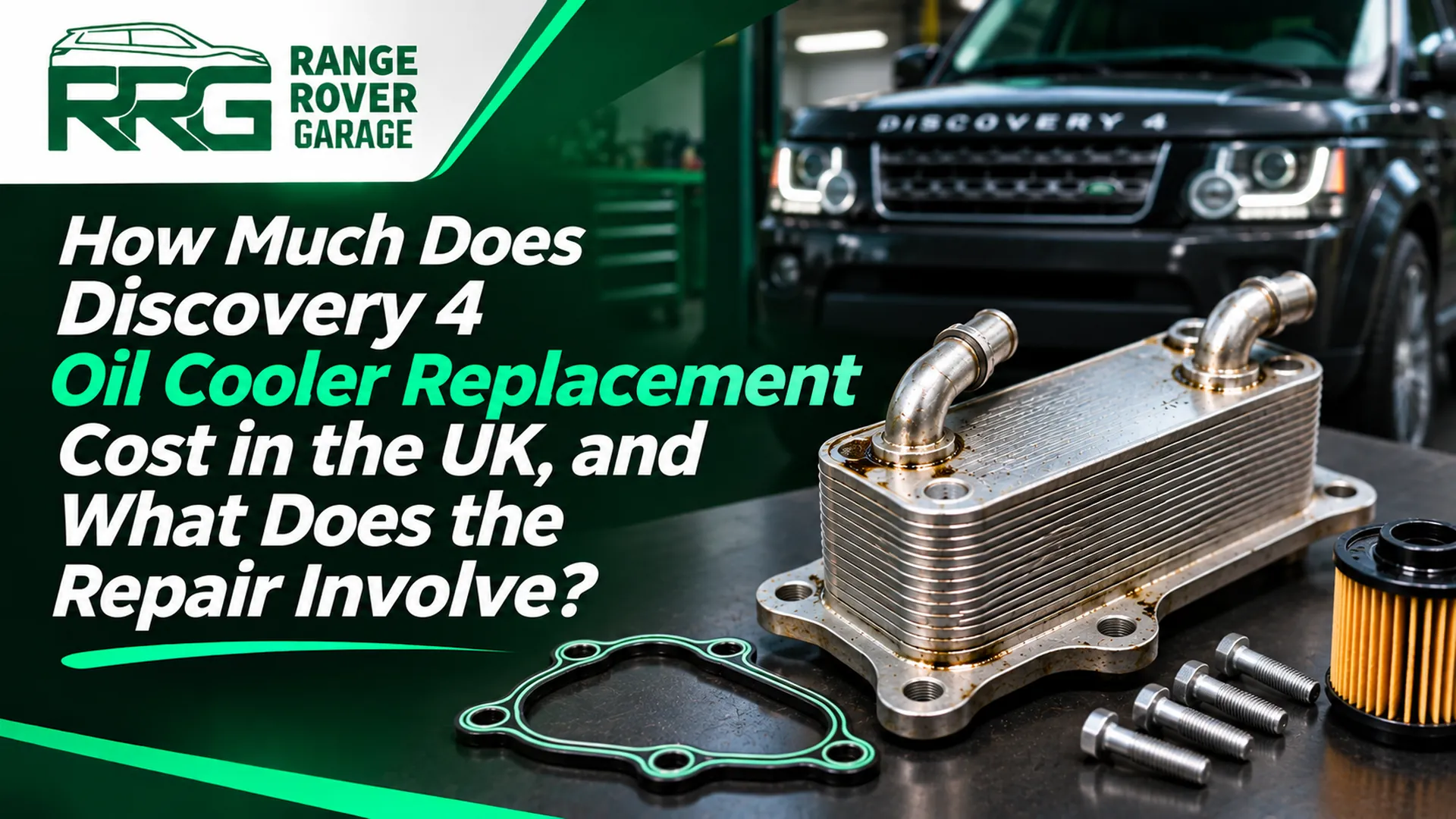
There is no single fixed cost, because every car arrives in a different condition. The final figure depends on what is wrong, what else has been affected, and how much work the clean-up needs. At rangerovergarage.co.uk we give a clear written quote once the fault is confirmed, so you know what is included before any work begins.
Rather than quote a number that may not fit your car, here is what makes up a Discovery 4 oil cooler replacement cost and what moves it up or down:
Cost element | What it covers | What affects it |
| Oil cooler or housing assembly | The replacement component, genuine or quality OEM equivalent | Engine variant, and whether the whole assembly needs replacing |
| Gaskets and O-ring seals | New sealing parts for a leak-free fit | Always replaced during the job |
| Labour | Removal, cleaning, installation and testing | Access, condition, and any seized or damaged fittings |
| Coolant | Full replacement after the repair | System size and level of contamination |
| Engine oil and filter | Fresh oil after any cross-contamination | Whether the oil was affected |
| Cooling system flush | Removing oil residue from the circuit | How much contamination is present |
| Damage inspection | Checking for knock-on effects | Whether the car was driven after the fault appeared |
| Further engine repair | Only if bearings or other parts are affected | How long the fault went unaddressed |
Three things push the final cost up most often:
- Contamination. The more widely oil and coolant have mixed, the more cleaning and fluid replacement is needed.
- Bearing or internal damage. If the car was driven for a long period after the fault appeared, additional inspection and repair may be required.
- Previous poor repairs. Reused seals, dirty mating faces or incorrect parts can mean undoing earlier mistakes.
The cheapest outcome nearly always comes from acting at the first sign. A prompt cooler replacement is a contained job. A delayed one can grow into an engine problem.
How Is a Discovery 4 Oil Cooler Replaced, and How Long Does It Take?
Replacement is a careful, staged job, and the time it takes depends on the engine, the access and how much contamination has to be cleaned out. It is usually a substantial workshop job rather than a quick fix, and a specialist will be able to confirm timing once the car has been inspected.
Here is how the job runs, step by step:
- Initial engine inspection. The fault is confirmed and any surrounding damage is noted.
- Draining the cooling system. Coolant is drained safely before any components are disturbed.
- Accessing and removing the faulty cooler. Surrounding parts, pipes and components are moved aside to reach the assembly.
- Cleaning the mating surfaces. Clean, undamaged faces are essential for a lasting seal. Factory procedures stress this for good reason.
- Installing new seals and gaskets. Fresh O-rings and gaskets go in every time. Old seals are never reused.
- Fitting the replacement oil cooler. The new part is installed and tightened to the manufacturer's specification.
- Refilling and bleeding the cooling system. Trapped air can cause overheating, so the system is bled properly.
- Pressure testing and final leak inspection. The repair is checked under pressure before the car leaves.
- Road test and re-inspection. The car is driven, then checked again for leaks.
What happens after replacement matters just as much as the repair itself. If oil and coolant had mixed, the engine oil and filter are changed, the cooling system is flushed, and the car is rechecked. Skipping those steps is how contamination causes trouble later.
Genuine Land Rover parts or quality OEM components, installed to TOPIx procedures, give the repair its best chance of lasting.
How Can You Prevent Future Oil Cooler Problems?
You cannot stop seals ageing, but you can catch trouble early. Follow the recommended service schedule, and check the oil and coolant levels regularly. Look under the bonnet for oil or coolant traces now and then, and never leave a warning light unchecked. Keeping the cooling system maintained, with fresh coolant at the right intervals, helps protect the cooler and its seals over the long term.
Frequently Asked Questions About Discovery 4 Oil Cooler Failure
What are the symptoms of Discovery 4 oil cooler failure?
Oil in the coolant expansion tank, milky residue under the oil filler cap, unexplained coolant loss, overheating, a burning oil smell, oil pooling around the engine and a low oil pressure warning are the main signs. Two or more together should be checked promptly.
Is oil cooler failure common on the Discovery 4?
It is a recognised weak point on the diesel engines, particularly as the car ages and the seals have gone through many heat cycles. Not every car will suffer it, but it is well known among Land Rover specialists.
How much does Discovery 4 oil cooler replacement cost?
It varies with the engine, the condition of the car and how far contamination has spread. We provide a clear written quote after diagnosis so you know what is included.
Can you drive with a faulty Discovery 4 oil cooler?
It is best not to. Continued driving risks contaminated oil, reduced lubrication and bearing wear. If the oil pressure light comes on, stop and arrange recovery.
Can an oil cooler failure cause oil to mix with coolant?
Yes. If the cooler or its seals leak internally, oil and coolant can cross-contaminate. That is why oil in the coolant tank is such an important warning sign.
How long does Discovery 4 oil cooler replacement take?
It is a thorough workshop job, and the time depends on the engine variant, access and contamination level. We can give you a realistic timeframe once the car has been inspected.
Can a faulty oil cooler damage the engine?
It can. If contaminated or thinned oil circulates for long enough, it can damage the crankshaft and main bearings, turning a repair into an engine rebuild or replacement.
Does the Discovery 4 TDV6 have oil cooler problems?
The 3.0 TDV6 and SDV6 diesels are the engines where oil cooler and filter housing faults are most often discussed. Correct diagnosis matters, because other leaks can look similar.
Get Your Discovery 4 Checked Before a Small Fault Becomes a Big One
If you recognise any of these symptoms, do not wait for the next top-up. A fast, accurate diagnosis is the cheapest protection your engine has, and a correctly completed Discovery 4 oil cooler replacement puts the problem behind you.
At rangerovergarage.co.uk, our Land Rover specialists diagnose the true source of the fault, repair it using the right parts and procedures, and explain everything we find in plain language. You get a clear quote before any work starts, honest advice on whether the repair makes sense, and a car that is tested before it goes back on the road.
Request your Discovery 4 oil cooler quote today through our contact page, or call us to talk through your symptoms. If your warning lights are on right now, tell us when you get in touch, and we will help you work out the safest next step.