Range Rover 3.0 V6 Supercharged Engine Problems: Causes, Warning Signs and UK Repair Options
Your coolant level keeps dropping, but there is no puddle on the drive. Or there is a rattle for the first few seconds after a cold start, and you are wondering whether it is harmless or the start of a big bill. Or you are about to buy a used model and want to know what you are walking into.
All three situations lead to the same question: what are the real Range Rover 3.0 V6 supercharged engine problems, and which ones should worry you?
This guide covers the petrol AJ126, the 3.0-litre supercharged V6 built by Jaguar Land Rover. It does not cover the 3.0 TDV6 and SDV6 diesels or the later Ingenium straight-six petrol engines, because their faults are different and mixing them up leads to wrong diagnoses. You will find the symptoms, the likely causes, how a specialist confirms the fault, and how to decide between repair, rebuild and replacement.
This guidance comes from the diagnostic approach we use at Range Rover Garage. Every engine is different, so treat it as a framework for asking better questions, not a replacement for a proper inspection of your vehicle.
What Are the Most Common Range Rover 3.0 V6 Supercharged (AJ126) Engine Problems?
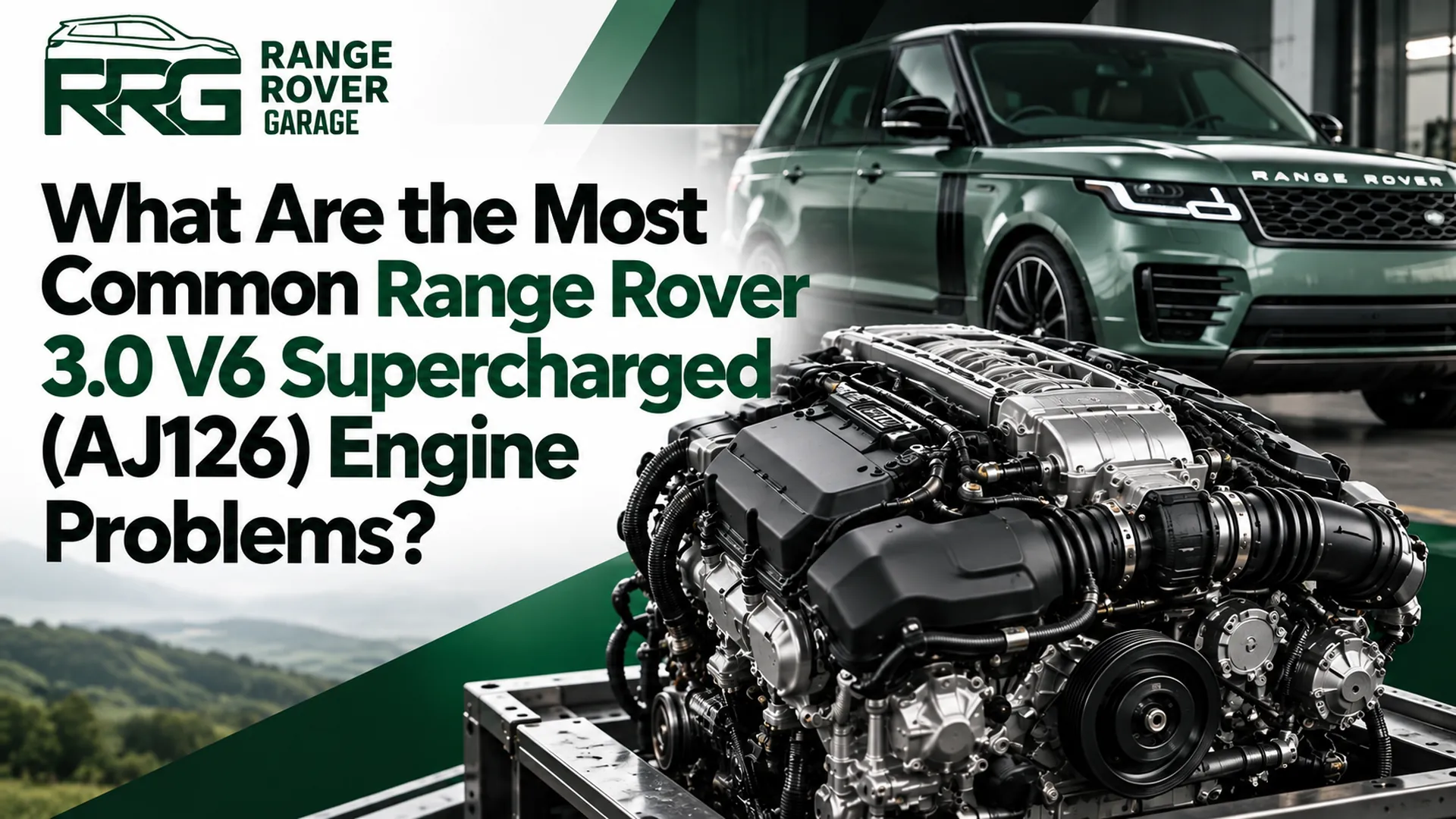
The most common AJ126 engine problems are coolant leaks from plastic cooling components, water pump and thermostat faults, supercharger isolator rattle, timing-chain noise, and misfires or rough running. Cooling-system faults matter most because a small leak left alone can lead to overheating and expensive internal damage.
The AJ126 is a capable engine. It is smooth, quick and well suited to a heavy vehicle. But it is now an older design, and the ageing of plastic and rubber parts in a hot engine bay accounts for most of its weak points. Maintenance history is the biggest factor in whether an individual engine behaves well or badly.
Which models and years are affected?
The AJ126 was fitted to the Range Rover L405, the Range Rover Sport L494 and the Range Rover Velar P380. It also appears in the Discovery 5 and in Jaguar models such as the F-PACE and F-Type. That is why owners searching for 2013, 2016, 2017 and 2018 problems often land on the same fault patterns.
Be careful with newer years. If you are searching for 2021 or 2022 Range Rover 3.0 V6 supercharged engine problems, check what is actually under your bonnet. Many later vehicles use the Ingenium straight-six or a different engine entirely. Confirm the engine code and model year through your VIN and the vehicle documents before you assume any of this applies.
Is the AJ126 reliable?
An honest answer is that it can be, if you look after it. A well-serviced engine with an inspected cooling system and a clean record can cover high mileage without drama. A neglected one, or one that has overheated even once, is a different proposition. Reliability here is less about the engine design and more about what the previous owners did and did not do.
The faults owners meet most often are these:
- Coolant crossover pipe failure, usually leading to coolant loss
- Water pump leaks and thermostat faults, affecting engine temperature
- Supercharger isolator rattle, a noise at idle or on light throttle
- Timing-chain noise, most noticeable on a cold start
- Misfires, rough idle and reduced power, often linked to ignition or the faults above
- Oil leaks and other age-related wear common to higher-mileage engines
Each item is covered in more detail below, starting with the one that causes the most damage.
Why Is My Range Rover 3.0 V6 Losing Coolant, and Can It Cause Overheating?
If your 3.0 V6 is losing coolant, the usual suspect is the plastic coolant crossover pipe that sits beneath the supercharger. Plastic pipes in a hot engine bay go through thousands of heat cycles. Over time they become brittle, develop cracks and start to seep, so the leak is often small, hidden and easy to miss.
That is why many owners report coolant loss without a visible leak. The coolant can evaporate on hot surfaces or leak into areas you cannot see without removing parts. The signs to watch for are:
- A coolant level that keeps dropping between top-ups
- A sweet smell after driving, especially once the engine is hot
- White steam or vapour from the engine bay
- A low coolant warning on the dashboard
- Temperature readings that creep higher than normal in traffic
A leak does damage in a predictable chain. Coolant leaks out, the level drops, the engine runs hotter and eventually overheats. Overheating can then damage the head gasket and cylinder head, which turns a manageable repair into a major one. Catching the leak early is the single most valuable thing an owner can do.
A pressure test confirms the leak. Topping up and hoping is not a fix, because the pipe will not heal itself.
Supercharger rattle or timing-chain rattle? How to tell the difference
Owners often struggle to separate these two noises, and the difference matters because the urgency is not the same.
Feature | Supercharger isolator rattle | Timing-chain rattle |
| Where it comes from | Top of the engine, near the supercharger | Front of the engine, near the chain cover |
| When you hear it | Idle or light throttle, often when warm | Mostly on a cold start, fading as oil circulates |
| Typical sound | Chatter or rattle, sometimes a whine under load | Brief metallic rattle or tapping |
| Common cause | Worn supercharger coupling or isolator | Tensioner or guide wear, or oil-related issues |
| Urgency | Plan an inspection soon | Inspect promptly, since timing faults can escalate |
This table is a guide, not a diagnosis. Noises travel through the engine and can mislead even experienced ears, so a specialist will confirm the source with a proper inspection rather than guessing. A noise that gets louder, or one that comes with warning lights or lost power, should be checked at once.
How Are Range Rover 3.0 Supercharged Engine Problems Diagnosed, and When Should You Stop Driving?
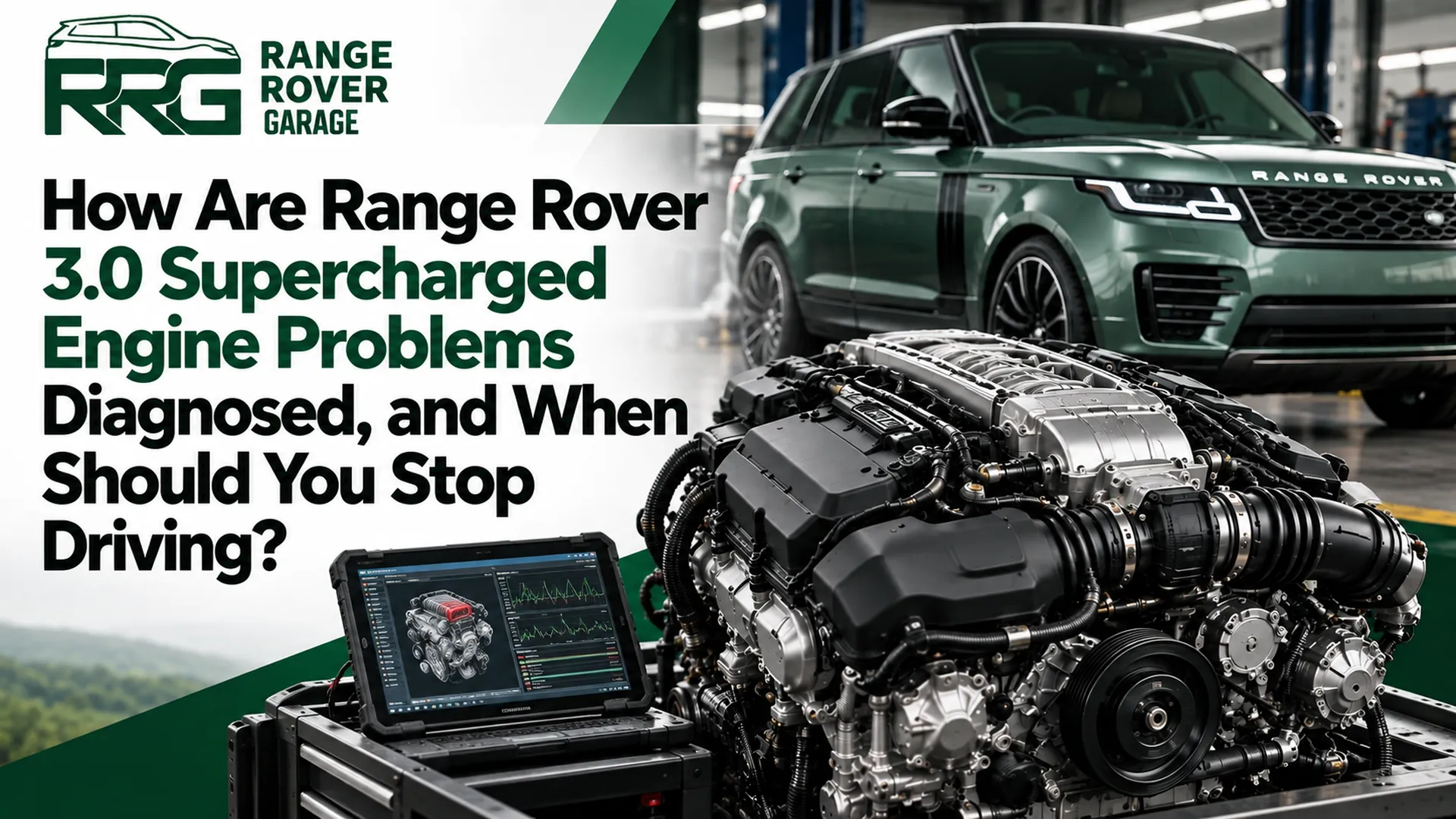
Diagnosis is where most of the money is saved or wasted. Guessing at parts is the most expensive way to fix a Range Rover. A structured approach finds the actual cause first, and that is how we work at Range Rover Garage.
How Does a Specialist Diagnose a Coolant Leak, Rattle or Misfire on an AJ126 Engine?
A good diagnosis follows a simple path: symptom, likely cause, test, confirmed fault. A fault code on its own rarely tells the whole story. It points to where to look, but the mechanical root cause still has to be established.
Symptom | Likely causes | What a specialist checks |
| Coolant level dropping | Crossover pipe, water pump, hoses, thermostat housing | Visual inspection, then a cooling-system pressure test |
| Rattle on cold start | Timing-chain tensioner or guides, supercharger isolator | Noise location, oil condition, live engine data |
| Rough idle or misfire | Spark plugs, ignition coils, fuel delivery, or an underlying mechanical fault | Fault-code scan, freeze-frame data, ignition and fuel checks |
| Overheating | Coolant loss, failed water pump, stuck thermostat | Full cooling-system inspection before any restart |
| Loss of power or limp mode | Boost leak, supercharger fault, sensor or misfire fault | Live data, boost checks, supercharger inspection |
A proper check also looks at service history, oil condition and the state of the coolant. These reveal how the engine has been treated, which often explains why the fault appeared.
After a repair, the job is not finished. Post-repair validation should include a pressure test, clearing and re-scanning the fault codes, and monitoring engine temperature on a test drive. This confirms that the fix worked and that nothing else was hiding behind the first fault.
Consider a typical scenario. An owner notices the coolant reservoir needs topping up every couple of weeks, but the driveway stays dry. A pressure test shows a slow seep from a crossover pipe that cannot be seen without removing the supercharger. Replacing it early costs far less than replacing it after an overheat. This pattern is common, and it is why we always recommend testing before replacing parts.
Which Warning Signs Mean You Should Stop Driving Your Range Rover Immediately?
Some symptoms are an invitation to book an inspection. Others mean you should stop right now. Pull over safely, switch off and arrange recovery if you see any of these:
- The temperature gauge climbing towards the red zone
- Steam coming from under the bonnet
- A red coolant or engine warning on the dashboard
- A sudden loss of power or the vehicle entering limp mode
- A loud mechanical knock or a sharp change in engine sound
Do not keep driving to see whether the warning clears. An engine that overheats for even a short distance can warp components and damage the head gasket. Recovery is far cheaper than the repair that follows from pushing on.
If you are unsure what you are seeing or hearing, our team can inspect it properly. You can book an engine diagnostic with Range Rover Garage through rangerovergarage.co.uk and have the fault confirmed before any work is recommended.
What Does a Cooling-System Pressure Test Actually Show?
A pressure test pressurises the cooling system while the engine is cold and safe to work on. If any pipe, hose, seal or joint is weak, pressure drops or coolant begins to seep. This reveals leaks that a visual check can miss, especially hidden ones under the supercharger. It is also the right first step before replacing any part, because it proves where the problem is rather than assuming.
Should You Repair, Rebuild or Replace a Range Rover 3.0 V6 Supercharged Engine, and What Does It Cost in the UK?

The right choice depends on how early the fault was caught and how much damage followed. A coolant pipe replaced before any overheating is a straightforward repair. An engine that has overheated badly is a different decision entirely.
How Much Does Range Rover 3.0 V6 Engine Repair Cost, and How Do You Decide Between Repair, Rebuild and Replacement?
Repair costs vary widely between vehicles, so no single figure fits every case. A trustworthy quote depends on what is actually wrong. The main factors that shape the final bill are:
- Access time. On the AJ126, reaching some cooling components means removing the supercharger, which adds significant labour.
- Parts quality. Original, upgraded and budget parts differ in durability, and the cheapest option is not always the best value.
- Related components. While the engine is open, it often makes sense to replace the water pump, thermostat or seals at the same time.
- Secondary damage. If the engine overheated, the scope of work can grow quickly.
- VAT and workshop rates. These differ between garages, so always ask for a written, itemised quotation.
Once the fault is confirmed, the decision usually falls into one of three paths.
Option | Best when | Main consideration |
| Repair | The fault is caught early, for example a failing coolant pipe with no overheating | Lowest cost and quickest turnaround |
| Rebuild | The block and cylinder head are sound but there is internal wear or overheating damage | Restores the original engine with fresh components |
| Replace | Damage is extensive, or a reconditioned unit offers better value | Depends on engine condition, availability and warranty |
Vehicle value matters too. A well-kept Range Rover with a clean history is often worth rebuilding. A tired example with other problems may make replacement the more sensible route. A good specialist will explain the trade-offs honestly, including when the cheapest path is not the right one.
Ask about warranty before committing. Find out what is covered, whether parts and labour are both included, and what is excluded. A clear warranty is one of the strongest signs of a workshop that stands behind its work.
How to reduce your risk of AJ126 problems
Prevention is not glamorous, but it works. These habits make the biggest difference:
- Inspect the coolant pipes and hoses at every service, not just when something goes wrong
- Check the coolant level regularly and investigate any drop rather than topping up repeatedly
- Use the correct coolant and keep the system in good condition
- Keep up with oil changes, since clean oil protects the timing chain and tensioner
- Respond early to new noises, warning lights or changes in how the engine runs
These checks cost very little compared with an engine repair, and they give you the earliest possible warning of trouble.
What to check before buying a used Range Rover 3.0 supercharged
Buying used is where the AJ126 rewards careful buyers and punishes hopeful ones. Before you hand over any money:
- Confirm the engine code and model year against the VIN, so you know exactly which engine you are buying
- Read the service history and look for coolant system work, oil changes and any repair records
- Inspect for coolant loss, staining or residue around the engine bay
- Listen to the engine during a genuine cold start, not one that has already been warmed up
- Check that the temperature stays steady on a test drive
- Arrange a pre-purchase diagnostic inspection with a specialist who knows the AJ126
An inspection costs a small fraction of what a hidden fault could cost later. It also gives you leverage in negotiation if problems are found.
Frequently asked questions about Range Rover 3.0 V6 engine problems
Is the Range Rover 3.0 V6 supercharged engine reliable?
It can be, provided it has been maintained well. The main risks are cooling-system parts that age with heat, and the damage that follows if a leak goes unnoticed. A full service history and a clean inspection are the best indicators.
Can I drive with a low coolant warning?
It is best not to. Low coolant means the engine may not be cooling properly, and driving on can cause overheating. Stop safely, check the level once the engine is cool and have the cause investigated.
Is supercharger rattle serious?
It is usually not an emergency, but it should not be ignored. A worn isolator or coupling tends to get worse over time, so an inspection soon is sensible.
How can I tell supercharger noise from timing-chain noise?
Supercharger rattle tends to come from the top of the engine at idle, while timing-chain rattle is usually heard at the front on a cold start. Because noise can be misleading, confirm the source with a specialist.
Can an overheated AJ126 be rebuilt?
Often yes, provided the block and cylinder head are still sound. An assessment will show how much damage there is and whether a rebuild makes sense compared with replacement.
What should I check before buying a used Range Rover 3.0 supercharged?
Confirm the engine code, review the service history, inspect for coolant loss, listen to a cold start and arrange a pre-purchase diagnostic inspection.