Range Rover 4.4 SDV8 Engine Rebuild Cost in the UK: What Is Included and What Drives the Price
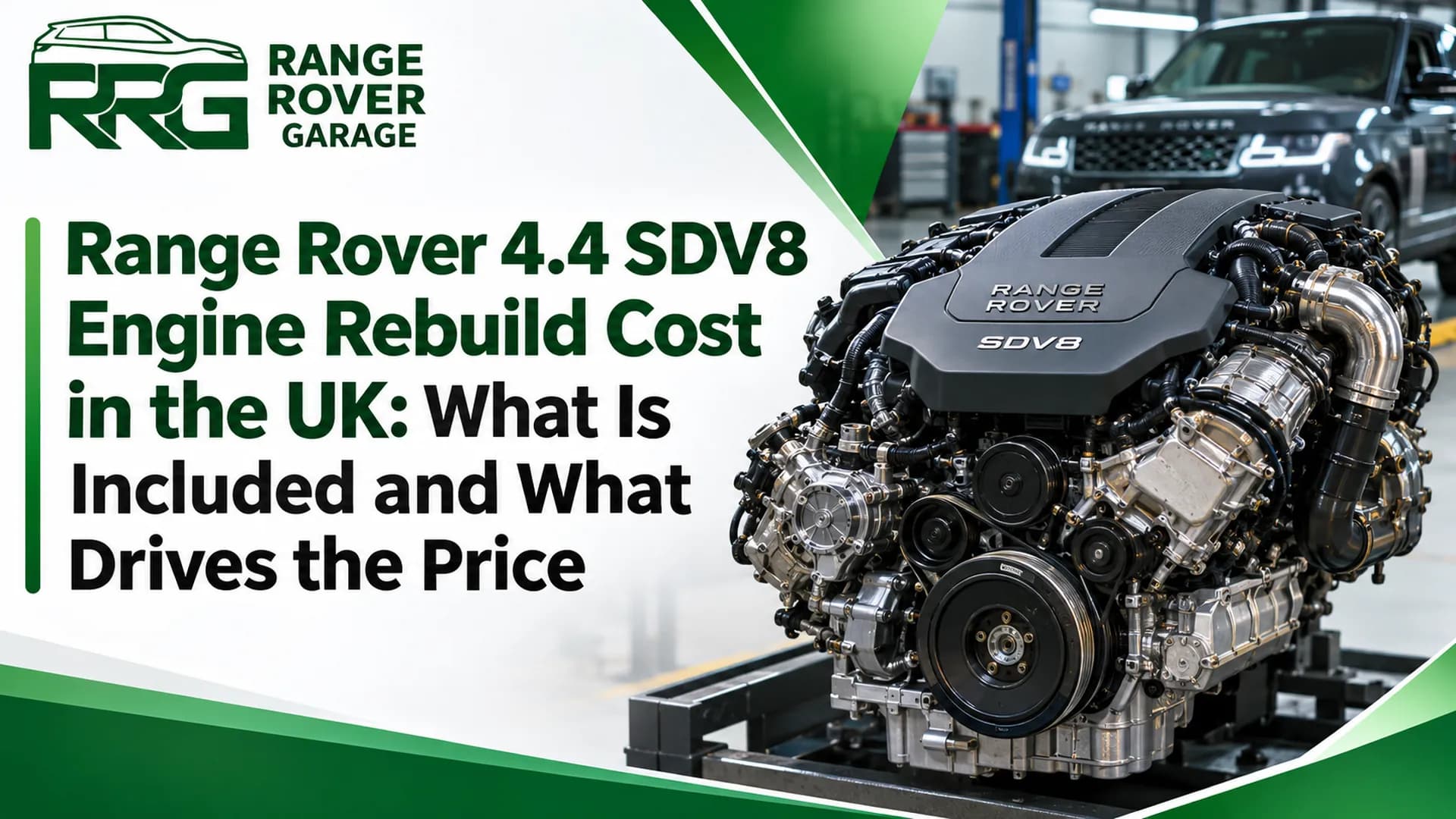
A knock from under the bonnet, an oil pressure warning that will not go away, and a garage that has just said the word "engine." If you drive a Range Rover with the 4.4 SDV8, that moment comes with one question attached: what is this going to cost?
Here is the honest position. Range Rover 4.4 SDV8 engine rebuild cost depends on what the inspection finds inside the engine, which parts need renewing, how much machining is required and how many hours of labour the job takes. Nobody can give you a trustworthy figure before the engine has been stripped and measured.
At Range Rover Garage, we work on Land Rover engines every day. This guide covers the 448DT engine rebuild from first symptom to final testing, explains what a proper quote contains, and helps you decide between rebuilding your original engine and fitting a reconditioned replacement.
A quick clarification first. The 4.4 SDV8 is a diesel V8 with the engine code 448DT. It is a different engine from the earlier 4.4 TDV8 and from the 3.0 SDV6, so check which one you have before comparing quotes.
How Much Does a Range Rover 4.4 SDV8 Engine Rebuild Cost in the UK?
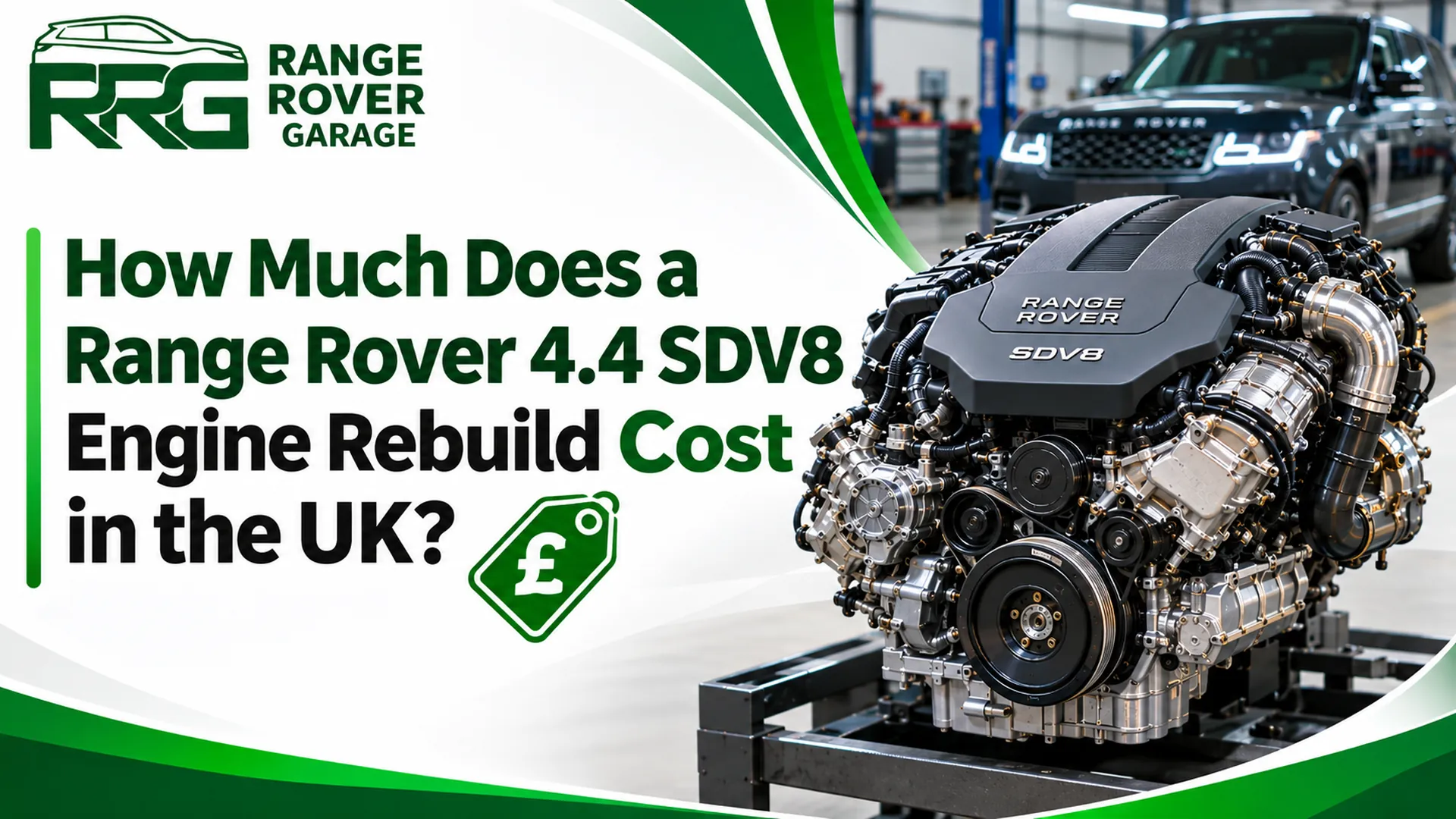
The short answer is that the 4.4 SDV8 engine repair cost is set by four things: the extent of internal damage, the parts and machining needed, the labour to remove and refit the engine, and the warranty you choose. A light rebuild on an engine caught early sits in a very different place from one that has run on after a bearing failure.
Be wary of any single figure quoted over the phone without an inspection. It is either a guess, or it excludes work that will appear later as an extra. You will also see online guides that mix up the Range Rover engine overhaul cost with the price of a replacement engine. They are different jobs with different numbers, and we keep them separate on this page.
What Is Included in a 448DT Engine Rebuild, and Why Does It Cost So Much?
A proper rebuild is a long, skilled process, and most of the cost is labour and precision work rather than parts alone. A complete 4.4 SDV8 engine rebuild follows a sequence:
- Diagnosis and inspection. The fault is confirmed before anything is dismantled.
- Engine removal. The engine comes out of the vehicle with ancillaries and connections carefully labelled.
- Strip-down and cleaning. Every internal component is separated and cleaned for inspection.
- Measurement and inspection. The crankshaft, bearings, pistons, bores, cylinder block and cylinder head are checked against tolerance.
- Machining and component replacement. Worn or damaged parts are machined, repaired or renewed, with new gaskets and seals throughout.
- Reassembly. The engine is rebuilt to specification, with correct bearing clearances and torque settings.
- Testing. Oil pressure, compression and leak checks confirm the engine is sound.
- Refitting and commissioning. The engine goes back in, fluids are renewed and the vehicle is road tested.
The table below shows what a complete quote should cover.
Cost element | What it covers | Why it matters |
| Removal and refitting labour | Taking the engine out and putting it back | A large share of the job on a vehicle this size |
| Strip-down and inspection | Dismantling, cleaning and measuring | Reveals the true extent of the damage |
| Parts | Bearings, pistons or rings where needed, gaskets, seals, oil pump where required | Depends entirely on what inspection finds |
| Machining | Block, head, crankshaft and bore work | Specialist work that restores correct tolerances |
| Fluids and filters | Fresh oil, coolant and filters | Protects the rebuilt engine from the first start |
| Testing | Pressure, compression and leak checks | Proves the rebuild before it leaves the workshop |
| VAT | Applied where relevant | Check whether the quote states it clearly |
| Warranty | Cover on parts and workmanship | Shows how much the workshop trusts its own work |
When you want a clear breakdown for your own engine, get a Range Rover engine rebuild quote by sending us your registration and a description of the symptoms. We confirm the engine, itemise each line and explain what depends on the inspection.
What Affects the Cost of a 4.4 SDV8 Rebuild, from Crankshaft and Bearings to Machining?
Two rebuilds on the same engine can end up very different, because the damage is never identical. These are the factors that move the total up or down:
- Crankshaft and bearing condition. Light bearing wear may need only new shells. A scored or damaged crankshaft needs grinding or replacement, which adds parts and machining time.
- Cylinder block and head condition. Overheating can warp or crack the head. Block damage changes the job completely.
- Pistons and connecting rods. Where bores or pistons are worn or damaged, more components are renewed.
- Lubrication system damage. If oil starvation caused the failure, the oil pump, oil galleries and oil cooler need checking and cleaning, because debris can travel through the whole system.
- Turbochargers and ancillaries. Metal debris in the oil can reach the twin turbochargers. Fuel injectors, the high-pressure fuel pump and the cooling system may also need attention.
- Workshop rates and machining requirements. A specialist with the right equipment completes machining accurately, which keeps the rebuild reliable.
This is why a rebuild cannot be priced honestly until the engine has been stripped. Until then, anyone quoting a firm figure is assuming what they will find.
The 448DT is also used across different vehicles and years, including the Range Rover L405, the Range Rover Sport L494 and some Discovery 4 applications. Ancillaries and specification vary, so we always match the work to your exact model year and engine code.
What Should a Fair Range Rover Engine Rebuild Quote Include?
A fair quote is itemised, specific and given after inspection. Use this checklist when you compare workshops:
- Is diagnosis included or separate? You should know before work begins.
- Are parts and machining listed? A single lump sum hides what you are paying for.
- Is removal and refitting stated? Along with fluids, filters and commissioning.
- Is VAT shown clearly? Check whether figures are inclusive.
- Is the warranty written down? Duration, what it covers, and any exclusions.
- What happens if further damage is found? The workshop should explain how it will contact you and get approval first.
- Is supply-only separated from supply and fit? This matters most if you are comparing against a reconditioned replacement engine.
Questions worth asking before you book:
- Have you rebuilt this exact engine before?
- Will you show me the inspection findings and the damaged parts?
- Who carries out the machining, and is it done in-house?
- How long will the vehicle be off the road?
- What are your running-in and servicing requirements after the rebuild?
A workshop that answers these confidently, and shows evidence, usually knows the engine.
What Causes 4.4 SDV8 Engine Failure, and When Does the Engine Need Rebuilding?
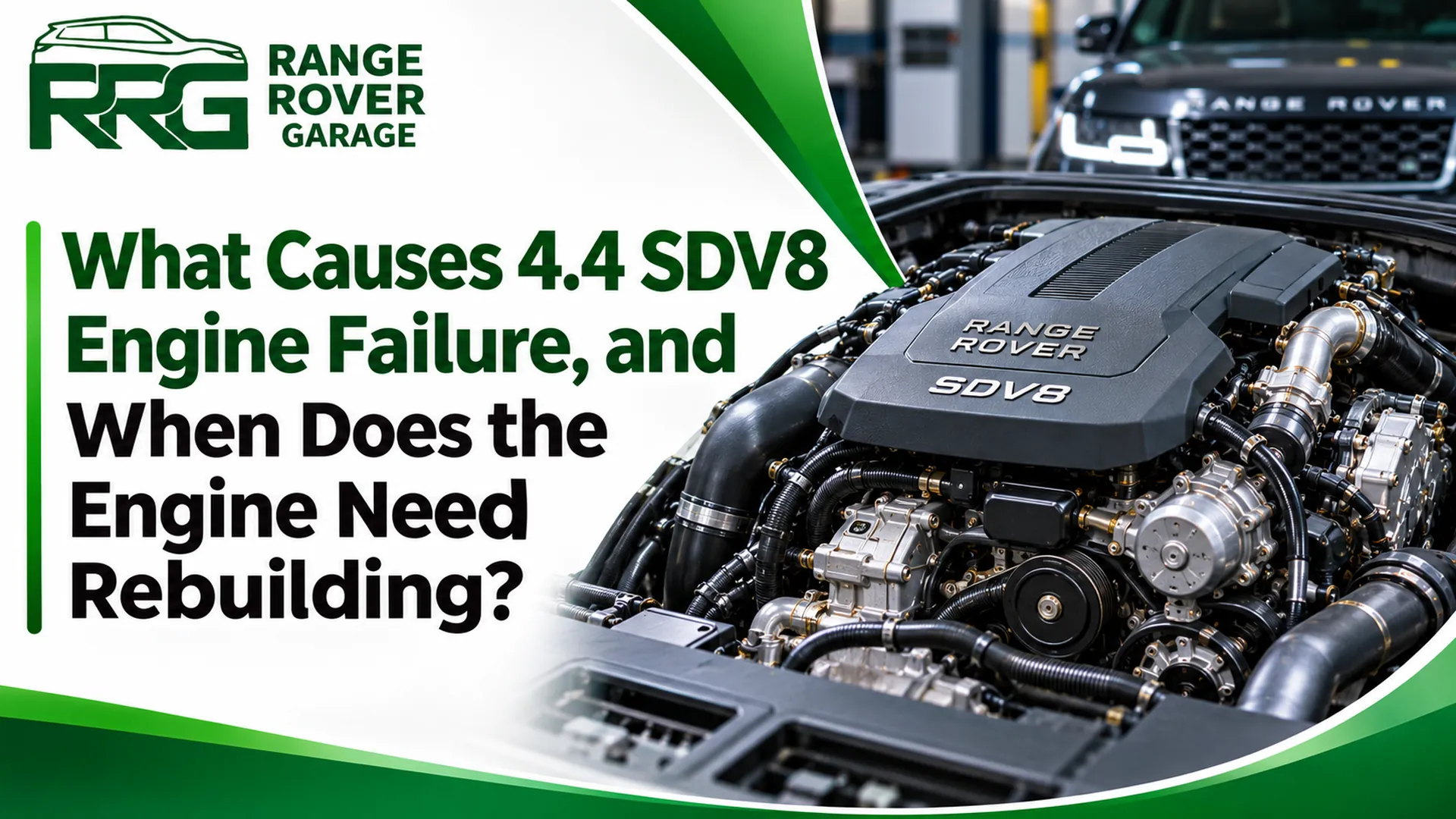
A 4.4 SDV8 engine can run for a long time when it is serviced properly. When one fails, the cause is usually traced back to lubrication, cooling or a developing fault that was left too long. Not every 448DT suffers from these problems, and each one needs diagnosis rather than assumption.
The causes we see most often include:
- Oil starvation and low oil pressure. Missed services, poor oil, a blocked pickup or a failing oil pump can starve the bearings of oil. Bearings and the crankshaft wear quickly without it.
- Bearing and crankshaft damage. The result of lubrication loss. Early signs include knocking from the bottom of the engine and falling oil pressure.
- Oil cooler and coolant leaks. Leaks can contaminate the oil or let the engine run hot, and overheating can damage the cylinder head and head gasket.
- Overheating. Coolant loss, a faulty thermostat or a failing water pump can push temperatures beyond safe limits.
- Turbocharger faults. A failing turbo can contaminate the oil and cause secondary damage.
- EGR and DPF problems. These emissions systems can cause power loss and rough running, and sometimes feed into wider engine trouble.
The warning signs are worth knowing:
- Knocking or rattling, especially from a cold start or under load
- A low oil pressure warning light
- Loss of power or reduced performance
- Coolant loss without an obvious leak
- Smoke from the exhaust on start-up
- Metal particles in the oil or filter
Acting early matters. Caught in time, a fault may be a repair rather than a rebuild. Left alone, damage spreads, and the choice narrows to a full rebuild or a replacement engine.
Can You Drive a Range Rover with Engine Knocking or Low Oil Pressure, and How Is It Diagnosed?
No. If you hear knocking, or the oil pressure warning light comes on, stop driving as soon as it is safe and arrange recovery. Continuing to run a bearing that is failing can turn a repair into a full rebuild within miles. A knock that sounds minor today can mean a ruined crankshaft tomorrow.
A proper diagnosis follows a sequence, not a guess:
- Listen and gather symptoms. The technician notes when the noise occurs and what else has happened, such as warning lights or coolant loss.
- Check oil level and condition. Contamination, fuel dilution or coolant in the oil all point to different causes.
- Test oil pressure. A reading below specification indicates a lubrication problem and the need for further investigation.
- Inspect the oil and filter for metal. Metal particles are a serious warning of internal wear.
- Run compression and leak-down tests. These show whether the cylinders, rings and valves are sealing properly.
- Inspect internally where needed. If findings point to internal damage, the engine is opened for a full assessment.
Fault codes can help, but they are clues, not conclusions. A code may point toward a sensor or a system when the real cause lies elsewhere, so diagnosis always combines scan data with physical checks.
If your Range Rover is knocking or showing a low oil pressure warning, book a Range Rover engine inspection with us. We confirm the cause first, then explain what your options are.
Should You Rebuild Your 4.4 SDV8 Engine or Buy a Reconditioned Replacement?
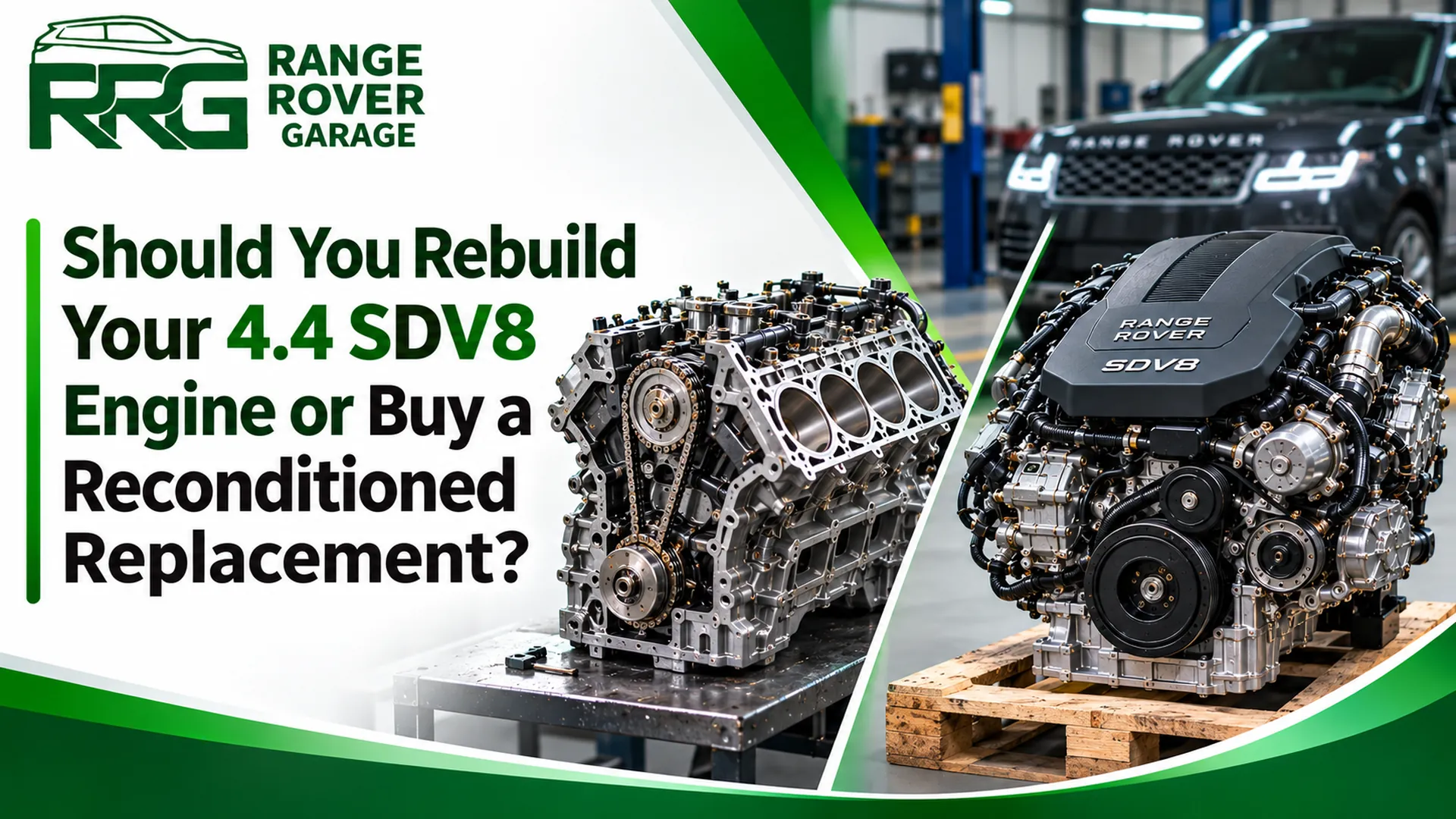
This is the decision that worries owners most, and the right answer depends on the damage, the value of the vehicle, how long you plan to keep it and what you want from the warranty.
Factor | Rebuild your original engine | Reconditioned replacement | Used replacement |
| Engine source | Your original 448DT | A reconditioned unit | A donor engine |
| Inspection | Full strip-down inspection | Checked and tested by the supplier | Tested, with less internal work |
| Compatibility | Original unit retained, so no matching needed | Model year, engine code, ancillaries and ECU specification must be verified | Same verification needed |
| Labour | Strip-down and rebuild, plus removal and refitting | Removal and refitting | Removal and refitting |
| Warranty | Depends on the workshop | Depends on the supplier | Often more limited |
| Best for | Engine damage is contained and the block is sound | Damage is widespread, or you want a faster turnaround | An older vehicle where a sensible fix matters most |
A few principles guide the choice:
- Rebuild when the damage is contained. If the block and head are sound, rebuilding your own engine keeps the original unit and its matching specification.
- Replace when the damage is widespread. Cracked blocks, extensive scoring or multiple failed components can make a reconditioned engine the more practical route.
- Check compatibility before ordering. Model year, engine code, ancillaries and ECU specification differ across the L405, L494 and Discovery 4. A replacement engine must be matched to your vehicle, not just to the badge.
- Consider how long you will keep the car. A vehicle you plan to keep for years justifies a thorough rebuild or a quality reconditioned unit.
- Ask for the root cause. Whichever route you choose, the cause of the original failure must be found and fixed, or the new engine meets the same fate.
A typical scenario. An owner hears a light knock on start-up and a brief oil pressure flicker, but keeps driving for a few weeks. One day the knock becomes constant. A technician finds bearing damage that has marked the crankshaft. Had the fault been checked at the first flicker, the repair could have been smaller. Now the owner weighs a full rebuild against a reconditioned replacement. The lesson is simple: the earlier you investigate, the more options you keep.
Why Choose a Range Rover Engine Specialist, and What Warranty Should You Expect?
A general garage learns on your engine. A main dealer charges for its overheads and often prefers to replace rather than repair. An engine specialist does this work every day, and that shows in four ways:
- Engine-level diagnosis. We look at the whole engine and the cause of failure, not just the part a code points to.
- Proper inspection and machining. Measurements are taken and recorded, and machining is done to specification.
- Honest advice on every route. We rebuild original engines and supply and fit reconditioned replacements, so we can tell you which makes sense for your vehicle.
- Written terms. Scope of work, warranty and exclusions are confirmed in writing before you commit.
A good rebuild warranty should be clear about:
- What it covers, both parts and labour
- How long it lasts and whether there are mileage limits
- What it excludes, such as damage from neglect or overheating after the rebuild
- Servicing requirements needed to keep it valid
- Running-in guidance and any post-rebuild inspection
Rebuild time depends on the damage, the parts needed and the machining involved. We give you a realistic timescale once the engine has been inspected, rather than a promise we cannot keep.
If you are comparing routes, we can lay them side by side for your exact engine. You can also explore our reconditioned 448DT engines, read our guide to common 4.4 SDV8 engine problems, or learn about our Range Rover engine diagnostic service.
Frequently Asked Questions About 4.4 SDV8 Engine Rebuilds
What is the 448DT engine, and which Range Rover models use it?
The 448DT is the engine code for the 4.4-litre twin-turbocharged diesel V8 used in the Range Rover L405, the Range Rover Sport L494 and some Discovery 4 applications. Always confirm the exact model year and engine code, because not every generation uses it.
What is the difference between the 4.4 SDV8 and the 4.4 TDV8?
Both are 4.4-litre diesel V8s, but they are different engines from different generations. They are not interchangeable by default, so check the engine code before ordering parts or a replacement.
Is it better to rebuild or replace a Range Rover engine?
It depends on the damage. If the block and head are sound, a rebuild of your original engine can be the best route. If damage is widespread, a reconditioned replacement is often more practical.
How long does a 4.4 SDV8 engine rebuild take?
It depends on the damage and the machining needed. A rebuild is a substantial job, not a quick one. We give you a realistic timescale once the engine has been stripped and inspected.
Does a rebuilt engine come with a warranty?
Warranty options are available on our rebuilt and reconditioned engines. We confirm the exact terms, cover and exclusions in writing with your quote.
Can you drive a Range Rover with engine bearing damage?
You should not. Bearing damage can worsen rapidly and destroy the crankshaft. If the engine is knocking or the oil pressure warning is on, stop driving and arrange recovery.
What causes low oil pressure in a 4.4 SDV8?
Possible causes include low oil level, poor-quality or contaminated oil, a failing oil pump, a blocked pickup or worn bearings. Diagnosis confirms which applies to your engine.
Is a reconditioned engine as good as a new one?
A properly reconditioned engine, rebuilt with worn parts renewed and tested, can be a dependable long-term solution. The quality depends on the supplier, so check the process and the warranty in writing.
What is the difference between a rebuilt and a reconditioned engine?
A rebuild usually means your own engine is stripped, repaired and reassembled. A reconditioned engine is typically a separate unit that has been refurbished and supplied to replace yours.
Is a used SDV8 engine worth buying?
It can be a sensible option for an older vehicle if the engine is properly tested, correctly matched to your vehicle and backed by a written warranty.
Get a Clear Answer on Your 4.4 SDV8 Before the Damage Spreads
A knocking engine does not have to become an expensive surprise. Get the fault diagnosed properly, understand what a fair rebuild quote contains, and compare your options honestly, from rebuilding your original 448DT to fitting a reconditioned replacement. That is how you stay in control of the cost.
Request your Range Rover engine rebuild quote today. Send us your registration and tell us what you are hearing. Our team will confirm the diagnosis, explain what your engine needs and give you a clear, itemised quote with the terms in writing. Prefer to talk it through first? Call us and speak to someone who works on Land Rover engines every day.