Range Rover 4.2 Supercharged Engine Problems: Causes, Repair Costs and What to Check
Your Range Rover 4.2 Supercharged pulls like a train, then a warning flashes up on the dash. Maybe the coolant level keeps dropping with no puddle on the drive. Maybe it judders on a cold morning, or the engine goes into limp mode on the motorway.
These are the classic Range Rover 4.2 supercharged engine problems, and they follow patterns. The 4.2 SC is not a bad engine. It is an ageing one, built into a heavy luxury 4x4, and most of its trouble comes from a handful of weak points, especially the cooling system around the supercharger.
Here is the short verdict. The 4.2 supercharged V8 can be a rewarding, long-lasting engine if the cooling system is maintained, misfires are chased properly and the service history is solid. Neglect it and it becomes the "money pit" you read about in forums. Below we cover the faults, the symptoms, the fault codes, what drives the repair bill, how to inspect one before buying, and when a specialist is worth calling.
What Are the Most Common Range Rover 4.2 Supercharged Engine Problems?
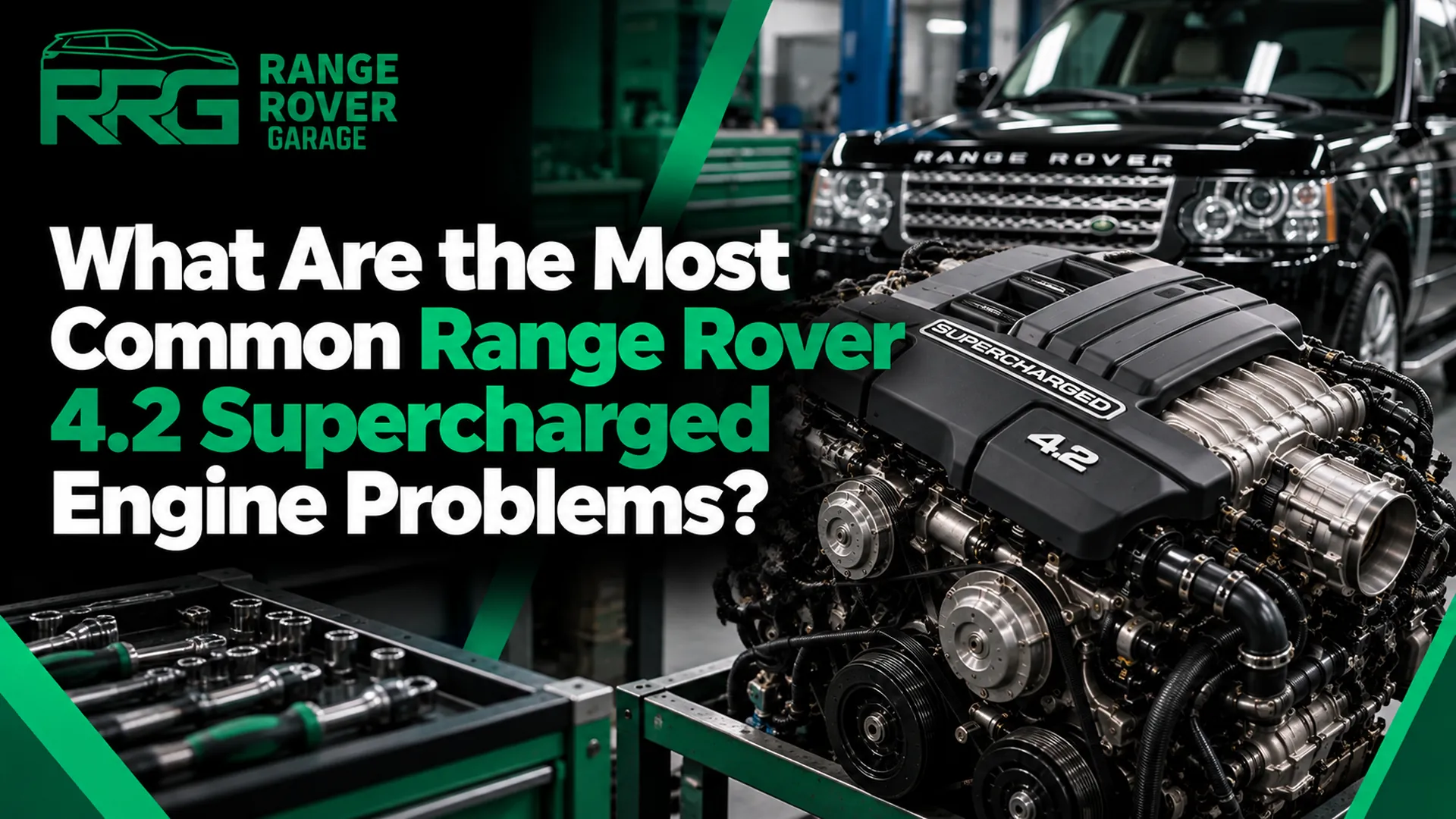
The 4.2 supercharged V8 is the Jaguar AJ-V8 engine, boosted by an Eaton M112 supercharger and producing around 390 bhp. It was fitted to the Range Rover L322 from 2006 to 2009 and to the Range Rover Sport L320 from 2005 to 2009. It also appeared in the Jaguar XJR, XKR and S-Type R, so any specialist who knows the AJ-V8 family will recognise its habits.
Most faults fall into a few groups. The table below shows how the symptoms usually connect to causes and fixes.
Symptom | Likely cause | Typical fix |
| Coolant loss with no visible leak | Failing silicone hoses under the supercharger, leaking intercooler heat exchanger | Pressure test, hose renewal, heat exchanger check |
| Reduced engine performance warning | Auxiliary coolant pump fault, sensor fault, or overheating protection | Fault code scan, pump and wiring test |
| Misfire on cylinder 8 when cold | Worn ignition coil or spark plug, injector fault | Coil and plug renewal, cylinder balance test |
| Judder when cold | Misfire, vacuum leak, dirty throttle body | Smoke test, throttle body clean, live data check |
| Rattle on cold start | Timing chain, tensioner or guide wear | Inspection, chain and guide kit if confirmed |
| Whining noise from the front of the engine | Supercharger bearing wear or drive belt components | Belt, tensioner and idler check, supercharger assessment |
| Oil smell or oil on the drive | Rocker cover gasket or other seal leaks | Seal renewal after a leak trace |
If you only remember one thing from this guide, remember this: start with the cooling system. It is where the 4.2 SC has the most trouble.
Why Does My Range Rover 4.2 Supercharged Lose Coolant or Overheat?
The supercharger produces a lot of heat, so the engine uses a separate coolant loop to cool the intake air. That loop has its own auxiliary coolant pump, an intercooler heat exchanger, a small header tank and a network of hoses and a crossover pipe sitting right under the supercharger.
All of this sits in a very hot, cramped area. Over many years, the silicone hoses harden, soften or seep at the joints. The heat exchanger can weep. The auxiliary pump can stop working or lose efficiency. When any one of these fails, the engine management system sees rising intake temperatures or a coolant fault and can reduce power to protect the engine.
Common situations we see:
- A driver tops up coolant repeatedly but never finds a leak, because the coolant is escaping onto hot components beneath the supercharger and evaporating.
- The temperature gauge climbs in slow traffic and settles on the motorway, which points to circulation or fan trouble rather than a simple thermostat issue.
- A sweet smell after parking, with no drips underneath.
A proper diagnosis uses a coolant pressure test, a visual inspection with the right access, and live data from the diagnostic system. Guessing, or swapping parts one by one, usually costs more in the end.
What Are the Symptoms of a Failing Auxiliary Coolant Pump on a 4.2 SC?
The supercharger auxiliary coolant pump is one of the most talked-about parts on owner forums such as FullFatRR and RRSport, and for good reason. When it weakens, the symptoms can look like several different faults.
Watch for these signs:
- Reduced engine performance message, often with the car feeling flat under load.
- Limp mode that clears after a restart, then returns.
- Loss of power at higher boost, because intake temperatures rise.
- A rising temperature gauge in traffic.
- Fault codes linked to coolant temperature or pump circuits.
The pump itself is only part of the story. Wiring, connectors and relays in that circuit need testing too, because a pump that is not receiving a proper supply looks identical to a dead pump. We always test the circuit before condemning the part, which saves our customers money and avoids repeat visits.
How Much Does an Aux Coolant Pump or Hose Replacement Cost in the UK?
We do not quote blind, because the cost of this job changes depending on what we find. Several factors decide the final figure:
- Access time. The supercharger area is tight, and labour hours depend on how much has to come off.
- Scope of the job. A pump alone is quicker than a pump, hose set, crossover pipe and a full coolant system bleed.
- Condition of the surrounding parts. If hoses are brittle, it makes sense to renew them together while access is already open.
- Parts choice. Genuine, OE-quality and budget parts differ in quality and warranty.
The most sensible approach is a diagnosis first, then a clear written quote. If you want one, you can request a quote from Range Rover Garage and we will explain exactly what is needed and why.
Is the 4.2 Supercharged V8 Reliable, and Is It Worth Repairing?
Honest answer: it depends on the individual car. A well-maintained 4.2 SC with a documented history can run for a long time. A neglected one, with unchecked hoses, ignored misfires and skipped oil changes, can become expensive quickly.
Reliability on this engine is less about one fatal flaw and more about whether small problems were fixed early. Cooling faults left alone lead to overheating. Misfires left alone damage catalysts and sensors. Missed oil changes accelerate wear on the timing chain components. That is why the same engine gets glowing reviews from some owners and horror stories from others.
Most owners ask the same question: is it worth repairing? Use this framework.
Situation | Usually worth repairing? | Why |
| Cooling hoses, pump, coils, plugs, gaskets | Yes | Wear items with a clear, predictable fix |
| Single misfire with good compression | Yes | Typically an ignition or fuel component |
| Timing chain noise caught early | Often | Repair before the damage spreads |
| Overheated engine with suspected head gasket or bore damage | Needs assessment | A compression and leak-down test will decide |
| Heavy mechanical damage on a low-value car | Consider alternatives | A rebuild or replacement engine may cost more than the car is worth |
If a major repair is on the table, the options are a repair, a rebuild, a reconditioned engine or a replacement unit. The right choice depends on the car's condition, the mileage and your plans for it. A specialist can advise honestly, including telling you when selling the car is the smarter option.
Does the 4.2 Supercharged Have Timing Chain, Cylinder 8 Misfire and Supercharger Noise Problems?
Yes, these three areas come up often, and each has its own tell-tale signs.
Timing chain rattle on cold start. The AJ-V8 uses timing chains with tensioners and guides. When oil pressure takes a moment to build on a cold start, worn tensioners or guides can produce a brief rattle. A short rattle that fades quickly is worth investigating promptly. A persistent or growing noise means stopping and getting the engine inspected, because a failed chain can cause serious engine damage. Do not ignore it, and do not keep driving it hoping it will go away.
Cylinder 8 dead miss when cold. Owners regularly report a rough start, a judder at idle and a flashing check engine light, often tied to cylinder 8 and often clearing as the engine warms up. The usual suspects are:
- ignition coil packs, which weaken with age and heat
- worn spark plugs, which strain the coils
- a fuel injector fault
- a vacuum leak, which can appear as lean codes on bank 1 or bank 2
Fault codes help narrow it down. P0300 points to a random misfire, P0308 to cylinder 8, and P0171 or P0174 to a lean condition on bank 1 or bank 2. A cylinder balance test and a smoke test will separate a coil fault from an air leak without guesswork.
Hesitation around 5000 rpm is another pattern. It often points to coils breaking down under load, though a sensor or fuel supply issue can cause it too.
Supercharger whine and drive belt noise. A whining or growling noise from the front of the engine can come from the supercharger bearings, but it just as often comes from the drive belt, idler pulley or tensioner. We always check the cheaper, easier components first and only then assess the supercharger itself. Replacing a supercharger for a noise that was actually a worn idler pulley is a mistake we see far too often.
Here is a quick comparison of how the 4.2 SC stacks up against its siblings:
Engine | Strengths | Watch points |
| 4.2 Supercharged | Strong performance, shared AJ-V8 family knowledge | Cooling loop, ignition components, chain wear on neglected cars |
| 4.4 V8 | Simpler with no supercharger or intercooler loop | Less power, still an ageing engine that needs proper servicing |
| 5.0 Supercharged | More power and a later design | Higher running costs and a more demanding car overall |
| TDV8 diesel | Strong torque and good economy | Different fault list, with its own expensive failures |
If you are choosing between them, the 4.2 SC suits buyers who want performance and are willing to look after the cooling system. The 4.4 suits those who want fewer moving parts. The 5.0 SC is the later, more powerful option for buyers with a bigger budget and expectations to match.
What Should You Check Before Buying a 4.2 Supercharged Range Rover?
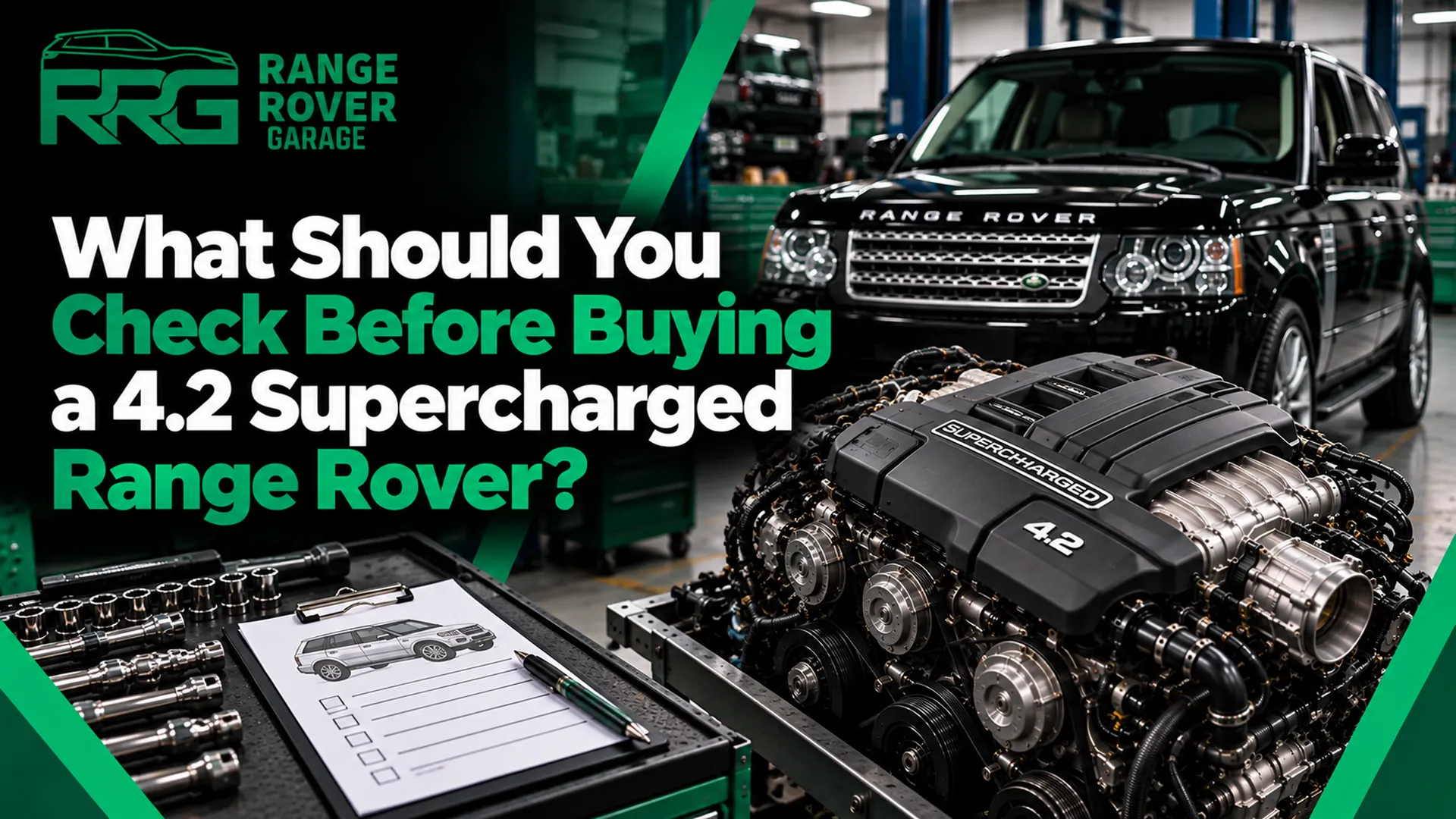
A cheap 4.2 SC is tempting. It is also where most buyers get caught out. A pre-purchase inspection costs a small fraction of what an avoidable repair can, and it gives you real negotiating leverage.
Use this checklist when viewing a car:
- Cold start. Ask the seller not to warm the car up before you arrive. Listen for chain rattle and watch for rough running or a misfire in the first minute.
- Coolant condition. Check both coolant tanks for level and colour. Look for staining or residue around the supercharger and hoses.
- Service history. Look for regular oil changes, evidence of cooling system work and any receipts for hoses, pumps, coils and plugs.
- Fault codes. A full diagnostic scan should show whether any codes are stored or recently cleared.
- Warning lights. All lights should come on at start-up and go out. Be wary if any bulb has been disabled.
- Test drive. Check for hesitation under load, limp mode, a rising temperature gauge and any whining noise.
- Underbonnet check. Look for oil weeping around the rocker covers, damaged hoses and signs of repair work.
- Mileage against condition. High mileage with documented care is often a better buy than lower mileage with no history.
Walk-away signs include a seller who refuses a cold start, unexplained coolant top-ups, a flashing check engine light, evidence of overheating and no service records at all.
Model year matters less than condition, but note that the Range Rover L322 and Range Rover Sport carry the same engine family and share many of the same faults. Whether you choose a Vogue SE, HSE or Autobiography, the checks are the same.
Where Can You Get a Specialist Diagnosis, Inspection or Repair for a 4.2 Supercharged in the UK?
At Range Rover Garage, we work on these engines every day, so we know where they fail and where they do not. That experience matters, because the 4.2 SC rewards a methodical approach. A general garage with a basic code reader often replaces parts that were never faulty. We diagnose first and repair second.
Our services for the 4.2 supercharged include:
- Full diagnostics using professional-grade equipment, with live data and fuel trim analysis
- Cooling system diagnosis, including pressure testing, pump and hose replacement and heat exchanger checks
- Misfire diagnosis, coil and plug renewal, and vacuum leak smoke testing
- Timing chain, tensioner and guide inspection and repair
- Supercharger, drive belt and tensioner assessment
- Oil leak tracing and gasket replacement
- Pre-purchase inspections for buyers who want an honest, independent opinion
- Preventative maintenance plans tailored to the 4.2 SC
You will get a clear explanation of the fault, the options and the reasoning behind our recommendation, along with a written quote before any work begins. If a repair does not make financial sense, we will say so.
For more detail, see our dedicated pages on Range Rover diagnostics, cooling system repair and pre-purchase inspections.
Frequently Asked Questions About Range Rover 4.2 Supercharged Engine Problems
Is the Range Rover 4.2 supercharged engine reliable?
It can be, with the right care. Reliability depends on the cooling system, ignition components and oil change history far more than on the engine design alone.
What are the most common problems with the Range Rover 4.2 supercharged?
Cooling system faults, including the auxiliary coolant pump and silicone hoses, are the most common, followed by misfires, timing chain wear, supercharger or belt noise and oil leaks.
How long does a Range Rover 4.2 supercharged engine last?
A well-maintained engine can last well beyond 100,000 miles, and many go further. Neglected cars may need major work much sooner.
What causes a misfire on a Range Rover 4.2 SC?
Usually worn ignition coils or spark plugs, but injectors, vacuum leaks and sensor faults can also be responsible. A diagnostic scan and cylinder balance test confirm the cause.
Why is my Range Rover supercharged losing coolant?
The most likely sources are the silicone hoses under the supercharger, the intercooler heat exchanger or the crossover pipe. Leaks here often evaporate on hot parts, leaving no visible puddle.
What does reduced engine performance mean on a Range Rover?
It means the engine management system has detected a fault and limited power to protect the engine. On the 4.2 SC, it is often linked to the cooling loop, a sensor or the auxiliary pump.
Why does my Range Rover judder when cold?
Cold judder usually points to a misfire, often on cylinder 8, or a vacuum leak. It can clear as the engine warms, which makes it easy to ignore, but the cause will not go away on its own.
Does the 4.2 supercharged have timing chain problems?
It can, particularly on engines with poor oil change history. Chain rattle on a cold start should be inspected without delay.
Is the 4.2 SC or 5.0 SC more reliable?
Both need good maintenance. The 4.2 SC has a well-known fault list that specialists understand thoroughly, while the 5.0 SC is a later, more powerful engine with its own demands.
Is the 4.2 supercharged the same engine as in the Jaguar XJR?
It is closely related. Both belong to the Jaguar AJ-V8 family, and many mechanical characteristics are shared.
How often should the coolant hoses be replaced on a 4.2 SC?
There is no single fixed interval. On older cars, inspect them at every service and replace them as preventative maintenance when they show hardening, softness or seepage.
What should I check before buying a 4.2 supercharged Range Rover?
Do a cold start, inspect both coolant tanks, review the service history, scan for fault codes and test drive for hesitation, limp mode and noises. A specialist pre-purchase inspection covers all of this properly.
Is a high mileage 4.2 supercharged Range Rover worth buying?
It can be, if the history is documented and the cooling system and ignition components have been maintained. A car with a clear record is usually safer than a lower mileage one without any.
Final Word
The Range Rover 4.2 supercharged engine problems you read about online are real, but they are also predictable. Most trace back to the cooling system, ageing ignition parts and neglected maintenance, and catching them early keeps repairs smaller and the engine healthier.
If your car is showing any of the symptoms in this guide, or you are about to buy one and want an honest assessment first, talk to the team at Range Rover Garage. Book a diagnostic or request a quote today, and get a clear answer before a small fault becomes a big one.