Range Rover Crankshaft Pulley Failure: Symptoms, Causes, Diagnosis and Replacement Guide
It usually starts small. A faint rattle on a cold start that fades after a minute. A belt that squeals when you turn the steering. A shimmer at idle that you feel through the seat but cannot quite place. Then one morning the battery light flickers, and you start wondering what is going on at the front of the engine.
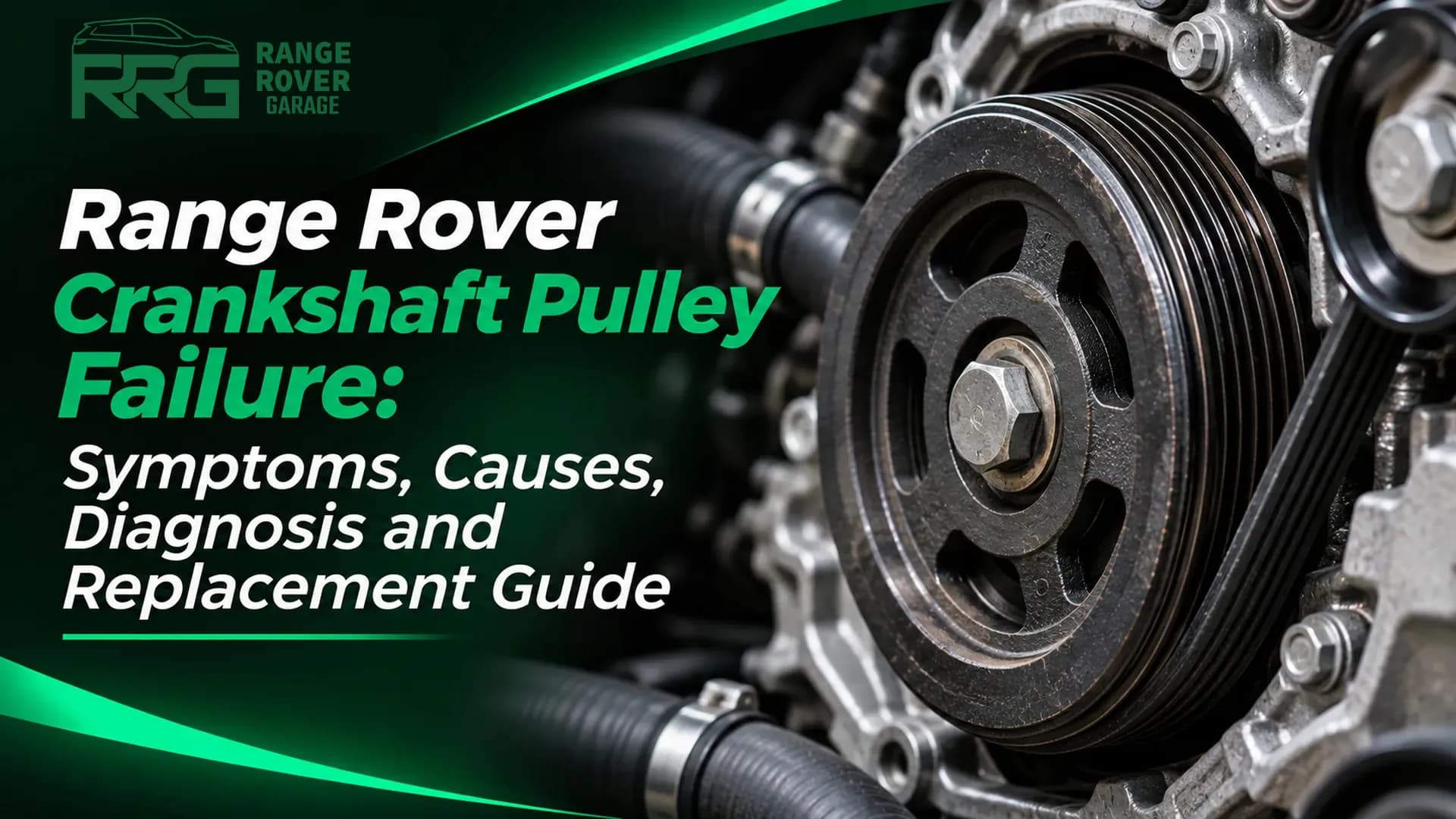
If that sounds familiar, Range Rover crankshaft pulley failure is one of the first things worth ruling out. The crankshaft pulley, often built as a harmonic balancer or vibration damper, drives the auxiliary belt and absorbs crankshaft vibration. When it loosens, wobbles or separates, the damage can spread from the belt to the accessories and, in the worst cases, to the crankshaft itself.
This guide explains the symptoms, causes, diagnosis, repair and cost factors in plain language. It reflects the kind of faults we see in the workshop at rangerovergarage.co.uk, and it draws on manufacturer technical documentation and published safety information. Crankshaft pulley problems are far cheaper to deal with early than late, so read on, then act on what you find.
What Are the Symptoms of Range Rover Crankshaft Pulley Failure?
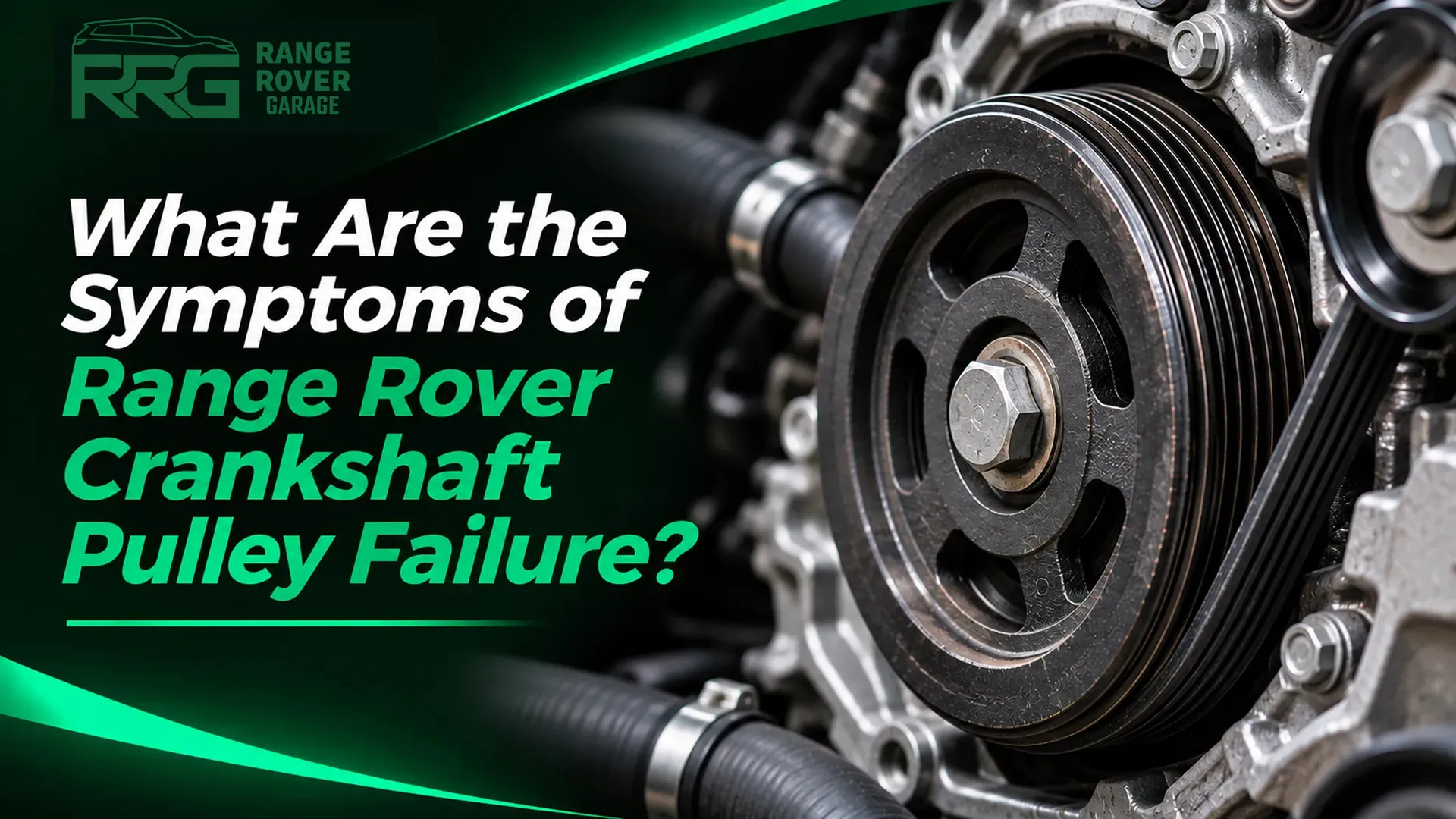
The most common signs are a visible wobble in the pulley, a rattling or knocking noise from the front of the engine, vibration at idle, a squealing auxiliary belt and a battery warning light. No single symptom proves the pulley is at fault, but two or more together make it a prime suspect.
Here is what owners and technicians notice most often:
- Visible pulley wobble. With the engine running, a healthy pulley spins true. If the outer ring seems to shimmy or run off-centre, the rubber damper bond may be breaking down or the retaining bolt may be loosening.
- Rattling or knocking from the front of the engine. A ticking or rattling sound, often worse on a cold start, can point to a separating damper or a pulley that has started to move on its hub.
- Engine vibration at idle or when accelerating. The damper exists to absorb torsional vibration. When it stops doing that job, you may feel roughness through the steering wheel, pedals or seat.
- Squealing or slipping auxiliary belt. A pulley that runs out of true pushes the belt out of alignment, which causes noise, glazing and uneven wear.
- Battery or charging system warning light. The alternator relies on the belt. If the belt slips or jumps off, the charging system stops working and the light comes on.
- Oil pressure warning or deeper knocking in advanced cases. These are serious. They can mean damage has moved beyond the pulley and into the crankshaft or bearings.
Treat these as indicators, not a verdict. A worn tensioner, a tired idler pulley or a failing alternator can produce similar noises, which is why a proper inspection matters before any parts are ordered.
Here is how it often plays out. An owner hears a light ticking on cold mornings and assumes it is just an old engine being an old engine. A few weeks later the belt starts to squeal, then one day the battery light comes on mid-journey because the belt has jumped off the pulley. What could have been a planned pulley and belt replacement becomes a roadside recovery. Catching the early noise is what keeps the repair simple.
What Causes a Range Rover Crankshaft Pulley to Fail, and Is It the Pulley, the Harmonic Balancer or the Bolt?
On many engines the crankshaft pulley and the harmonic balancer are the same assembly. The pulley carries the belt grooves, while a bonded rubber layer between the hub and the outer ring acts as a torsional vibration damper. That is why you will see the terms used almost interchangeably, even though they describe different jobs of the same part.
Failure usually comes down to one of these causes:
- Rubber damper deterioration. Heat, age, oil contamination and thousands of vibration cycles gradually break down the bonded rubber until it cracks or separates.
- Damper separation. Once the bond fails, the outer ring can slip or wobble relative to the hub, and the belt loses its straight path.
- Excessive torsional vibration. If the damper no longer absorbs vibration, extra stress passes into the crankshaft and surrounding components.
- Loose or fractured retaining bolt. The retaining bolt clamps the pulley to the crankshaft nose. If it loosens or breaks, the whole assembly can move.
- Misalignment after earlier work. A pulley fitted without correct alignment, or with reused fasteners, can fail early.
- Ordinary age and mechanical wear. Component fatigue builds over time, particularly on higher-mileage engines.
Because these are different faults with different consequences, here is how they compare:
Fault | Typical sign | Risk level | What it means for the repair |
| Failed rubber damper | Wobble, rattle, belt noise | Moderate to high | Replace the pulley assembly and check the belt |
| Loose or broken retaining bolt | Pulley movement, knocking | High | Stop driving, inspect the crankshaft nose, replace the bolt and washer |
| Crankshaft nose damage | Persistent knock, looseness after refitting | Very high | Specialist assessment, possible further engine work |
One important distinction. Pulley or damper failure is not the same as crankshaft bearing failure on the TDV6 or other engines. Bearing problems start inside the engine and have their own symptoms and causes. A failing pulley can cause serious damage if ignored, but it is a separate condition.
Can You Drive a Range Rover With a Damaged Crankshaft Pulley?
The honest answer is no, or only as far as a safe place to stop or the nearest workshop. A loose or unstable pulley can fail without further warning, and the consequences get expensive quickly.
Here is the risk chain. A wobbling pulley damages the belt. A damaged or thrown belt takes away the charging system, and on many setups the water pump and power steering assistance as well. Overheating or loss of steering assistance is an immediate safety concern. If the retaining bolt has also failed, the pulley can work loose on the crankshaft nose, which risks damage to the crankshaft and a sudden engine shutdown.
Stop driving and arrange recovery if you notice any of the following:
- The pulley is visibly wobbling or looks off-centre.
- You hear loud knocking or rattling from the front of the engine.
- The battery light comes on and the belt has stopped turning or has come off.
- The oil pressure warning light appears.
- The temperature gauge starts climbing.
If you are unsure, a short diagnostic visit costs far less than an engineservices repair. Call us at rangerovergarage.co.uk, describe what you are hearing and seeing, and we will help you decide whether it is safe to drive in or better to arrange recovery. We can usually offer a diagnostic inspection within the same week.
How Do You Diagnose Range Rover Crankshaft Pulley Problems, and Which Models Are Affected?
A proper diagnosis combines visual checks, running tests and a look at the whole auxiliary drive, so the real source of the noise is found before parts are replaced. Guessing is the most common reason owners pay twice.
The first step is confirming exactly what you have, because pulley design, bolt conservices figuration and repair procedure vary by engine and model year. Models that come up in workshops include the Range Rover L322 and L405, the Range Rover Sport L494 and the Range Rover Velar L560, across engines such as the 3.0 TDV6 and SDV6 diesels, the supercharged V6 and V8 petrols, and the Ingenium range. That list is context rather than a claim that every variant shares the same failure history. Each engine needs checking against its own specification.
Manufacturer workshop documentation describes the crankshaft pulley and torsional vibration damper assembly in detail, including how it mounts to the crankshaft and drives the auxiliary belt. Following that documentation, rather than working from habit, is what separates a lasting repair from a repeat visit.
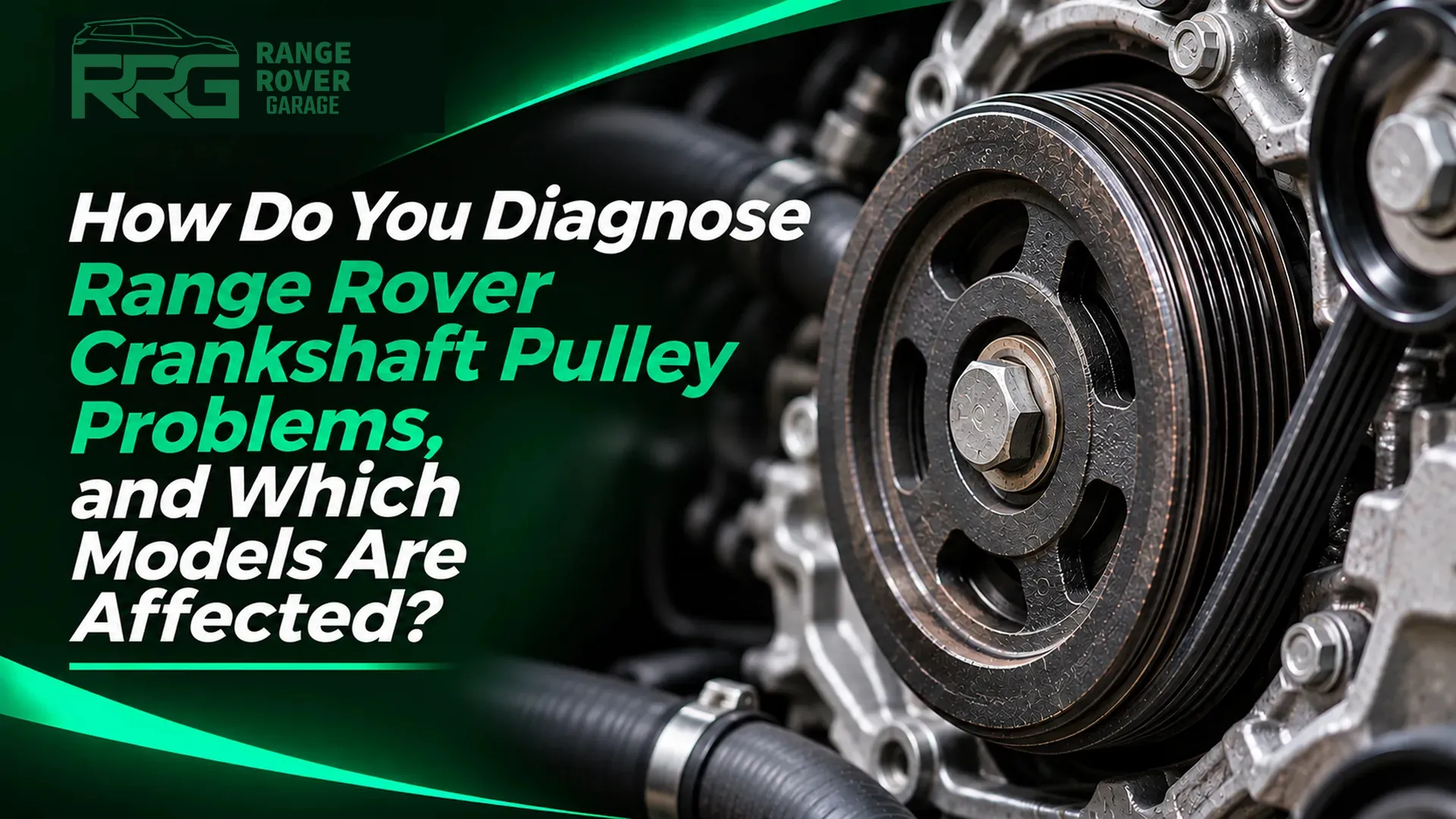
In practice, a failed damper tends to look unmistakable once you know what to check: cracked or bulging rubber, an outer ring sitting slightly proud or off-centre, witness marks where the ring has been moving, and a belt that is glazed or tracking to one side. We photograph these findings before any repair starts so owners can see exactly what we found and why the part needs replacing.
How Is a Range Rover Crankshaft Pulley Inspected and Tested?
A competent inspection follows a set order, moving from the simplest checks to the most conclusive. This is the sequence we use:
- Visual inspection. The technician checks the pulley, damper rubber and hub for cracking, bulging, separation or heat damage.
- Wobble and runout check. With the engine running, the pulley is watched for lateral movement, and checked for pulley runout where the specification allows.
- Auxiliary belt inspection. The belt is checked for wear, glazing, fraying and tracking, since a misaligned pulley leaves clear marks.
- Retaining bolt and mounting check. The bolt and the pulley seating are inspected for looseness, movement or signs of previous poor work.
- Look-alike component checks. The belt tensioner, idler pulley and alternator pulley are tested to rule out faults that mimic pulley failure.
- Fault code scan and charging system check. An OBD scan and a charging test show whether the belt problem has already affected the electrical side.
This order matters because each step narrows the possibilities. Skipping to a replacement can leave the real fault untouched, and the noise returns a week later.
Is There a Range Rover Crankshaft Pulley Bolt Recall?
There has been a safety campaign concerning crankshaft pulley retaining bolts on certain Range Rover, Range Rover Sport and Range Rover Velar vehicles from the 2019 model year. Published information from Transport Canada and the US National Highway Traffic Safety Administration describes a potentially fractured pulley bolt, a loose pulley and a risk of sudden engine failure.
It is important to read this accurately. The campaign applies to specific affected vehicles, not to every Range Rover. The sources cited are North American, so UK owners should confirm their own position directly rather than assume. Here is what to do:
- Check your vehicle identification number. Your VIN identifies your exact build and is the key to any recall check.
- Contact Land Rover or a main dealer. They can confirm whether any campaign applies to your car, using the VIN.
- Use official UK recall checking services. The government vehicle recall information service is the reliable place to look for UK recalls.
- Book an inspection if you notice symptoms. A rattle, wobble or knocking from the front of the engine should be inspected regardless of recall status.
If you are unsure whether your car is affected, we can look at the pulley and bolt for you and advise on the next step.
What Should You Check Before Buying a Used Range Rover With Pulley or Belt Noise?
Listen first, look second and ask for paperwork third. A used Range Rover that makes noise from the front of the engine deserves caution until the cause is known.
Before you commit, work through this list:
- Start the engine from cold. Rattles and ticking are often most obvious in the first minute.
- Watch the pulley with the engine running. Any visible wobble or off-centre movement is a red flag.
- Inspect the auxiliary belt. Glazing, cracking or uneven wear suggests alignment problems.
- Ask for invoices. Look for evidence that the pulley, bolt and belt were replaced together by a specialist.
- Check for oil leaks at the front of the engine. Oil can weaken the damper rubber and point to a seal issue behind the pulley.
- Arrange a specialist pre-purchase inspection. It costs little compared with the engine repair it could save you from.
A car with a documented, correct pulley replacement is a sensible buy. One with unexplained noise and no history is a gamble.
How Much Does Range Rover Crankshaft Pulley Replacement Cost in the UK, and What Does the Repair Involve?
There is no single fixed cost, because every car arrives in a different condition and every engine has a different specification. The final bill depends on which pulley fits your engine, how much access work is needed and whether anything else has been damaged. At rangerovergarage.co.uk we give a clear written quote once the fault is confirmed, so you know exactly what is included before any work begins.
Rather than quote a figure that may not suit your car, here is what makes up a Range Rover crankshaft pulley replacement cost and what moves it up or down:
Cost element | What it covers | What affects it |
| Pulley or damper assembly | The replacement crankshaft pulley, genuine or quality OEM equivalent | Engine, model year and supplier |
| Bolt and washer | New retaining fasteners fitted every time | Specification for your engine |
| Auxiliary belt and tensioner | New belt, plus a check on tensioner and idler pulleys | Wear level and whether belt damage has occurred |
| Labour | Access, removal, fitting, testing and re-inspection | Engine layout and how much must be moved aside |
| Additional inspection | Checking the crankshaft nose, front seal area and related parts | Whether the car kept running after the fault appeared |
| Secondary repair | Only if the crankshaft, seal or other parts are damaged | How long the fault was left |
Three things push the final cost up most often:
- Delay. A pulley caught early is a contained repair. One that has been left for weeks can take the belt, the seal or the crankshaft nose with it.
- Damage behind the pulley. An oil leak from the front seal, or damage to the crankshaft nose, adds further work.
- Engine and access. Some engines need more components moved to reach the pulley, which affects labour time.
Two other choices affect the quote. An independent Land Rover specialist and a main dealer will usually price the same job differently, so it is fair to compare. Genuine and quality OEM parts generally outlast cheap alternatives, and since the pulley controls vibration at the heart of the engine, it is not the place to cut corners.
How Is a Range Rover Crankshaft Pulley Replaced, and How Long Does It Take?
Replacement is a careful, staged job, and the time depends on the engine, the access and what the inspection reveals. It is more involved than swapping a belt, and we confirm timing once the car has been inspected.
Here is how the job runs:
- Confirm the specification. The exact pulley, bolt and procedure for your engine and model year are verified first.
- Remove the belt and access components. Anything in the way is moved aside to reach the pulley.
- Remove the pulley and retaining bolt. The assembly is taken off carefully, with attention to how it was seated.
- Inspect the crankshaft nose and front seal area. This is where hidden damage shows up. Any wear, scoring or oil seepage is dealt with before the new part goes on.
- Fit the new pulley with new fasteners. The assembly is installed and torqued to the manufacturer's specification. Old bolts are never reused.
- Refit and check the belt and tensioner. Belt routing, tension and tracking are verified so the new pulley does not inherit an old problem.
- Test and re-inspect. The engine is run, checked for wobble, noise and charging output, then rechecked after a road test.
A quick answer to a common question: a failed rubber damper is replaced, not repaired. Once the bond between the hub and the outer ring has broken down, there is no reliable way to restore it. The same goes for the retaining bolt, which is a single-use fastener.
As for the belt, replacing it alongside the pulley is sensible. A belt that has run on a wobbling pulley is usually worn or misaligned, and fitting a new pulley with an old, damaged belt is false economy.
After the repair, we road test the car, recheck for noise, wobble and charging output, and advise on when to inspect the pulley again.
How Can You Prevent Crankshaft Pulley Failure?
You cannot stop rubber ageing, but you can catch trouble early. Listen to the engine from cold, and treat any new rattle or squeal as worth checking. Have the auxiliary belt, tensioner and pulley looked at during every service. Never ignore a charging light, and act at the first sign of wobble. If your engine has recently had front-end work, ask that the pulley and bolt were replaced correctly with the right fasteners. Preventive checks are quick, and they protect the engine from the most expensive outcomes.
Frequently Asked Questions About Range Rover Crankshaft Pulley Failure
What are the symptoms of Range Rover crankshaft pulley failure?
Visible wobble, a rattle or knock from the front of the engine, vibration at idle, a squealing belt and a battery warning light are the main signs. Two or more together should be inspected promptly.
How do I know if my Range Rover crankshaft pulley is wobbling?
Watch the pulley with the engine running. The outer ring should spin evenly. If it shimmies or looks off-centre, switch off and have it inspected. A technician can also measure runout properly.
What causes a Range Rover crankshaft pulley to fail?
Rubber damper deterioration, damper separation, a loose or fractured retaining bolt, misalignment after earlier work and general age are the main causes. Excessive torsional vibration speeds up the wear.
Can a broken crankshaft pulley bolt cause engine failure?
It can. A fractured bolt lets the pulley move on the crankshaft nose, which risks damage to the crankshaft and a sudden engine shutdown. Stop driving and arrange recovery if you suspect it.
Can you drive with a faulty crankshaft pulley?
It is best not to. A failing pulley can throw the belt, cut charging and cooling drive, and damage the crankshaft. If you see wobble, hear knocking or get a warning light, stop and call for advice.
What affects the cost of crankshaft pulley replacement?
The engine and pulley specification, the labour involved, whether the belt and tensioner also need replacing, and whether any secondary damage has occurred. We provide a written quote after inspection.
How long does crankshaft pulley replacement take?
It depends on the engine, access and findings during inspection. We confirm a realistic timeframe once the car has been looked at.
Is there a Range Rover crankshaft pulley bolt recall?
A safety campaign covered certain 2019 Range Rover, Range Rover Sport and Range Rover Velar vehicles, but it does not apply to every Range Rover. Check your VIN with Land Rover or the official UK recall service to confirm your own position.
Get Your Range Rover Checked Before a Rattle Becomes a Breakdown
If you have noticed a wobble, a rattle or a squealing belt, do not wait for the next warning light. A fast, accurate diagnosis is the cheapest protection your engine has, and a properly completed Range Rover crankshaft pulley replacement puts the problem behind you.
At rangerovergarage.co.uk, our Land Rover specialists find the true source of the fault, repair it with the right parts and fasteners, and explain every finding in plain language. You receive a clear quote before any work starts, honest advice on what is needed and what is not, and a car that is road tested before it comes back to you.
Request your Range Rover crankshaft pulley quote today through our contact page, or call us to talk through your symptoms. If your warning lights are on right now, tell us when you get in touch and we will help you decide the safest next step.