Range Rover Flood Damaged Engine: What Happens Inside, Can It Be Repaired and What Should You Do Now?
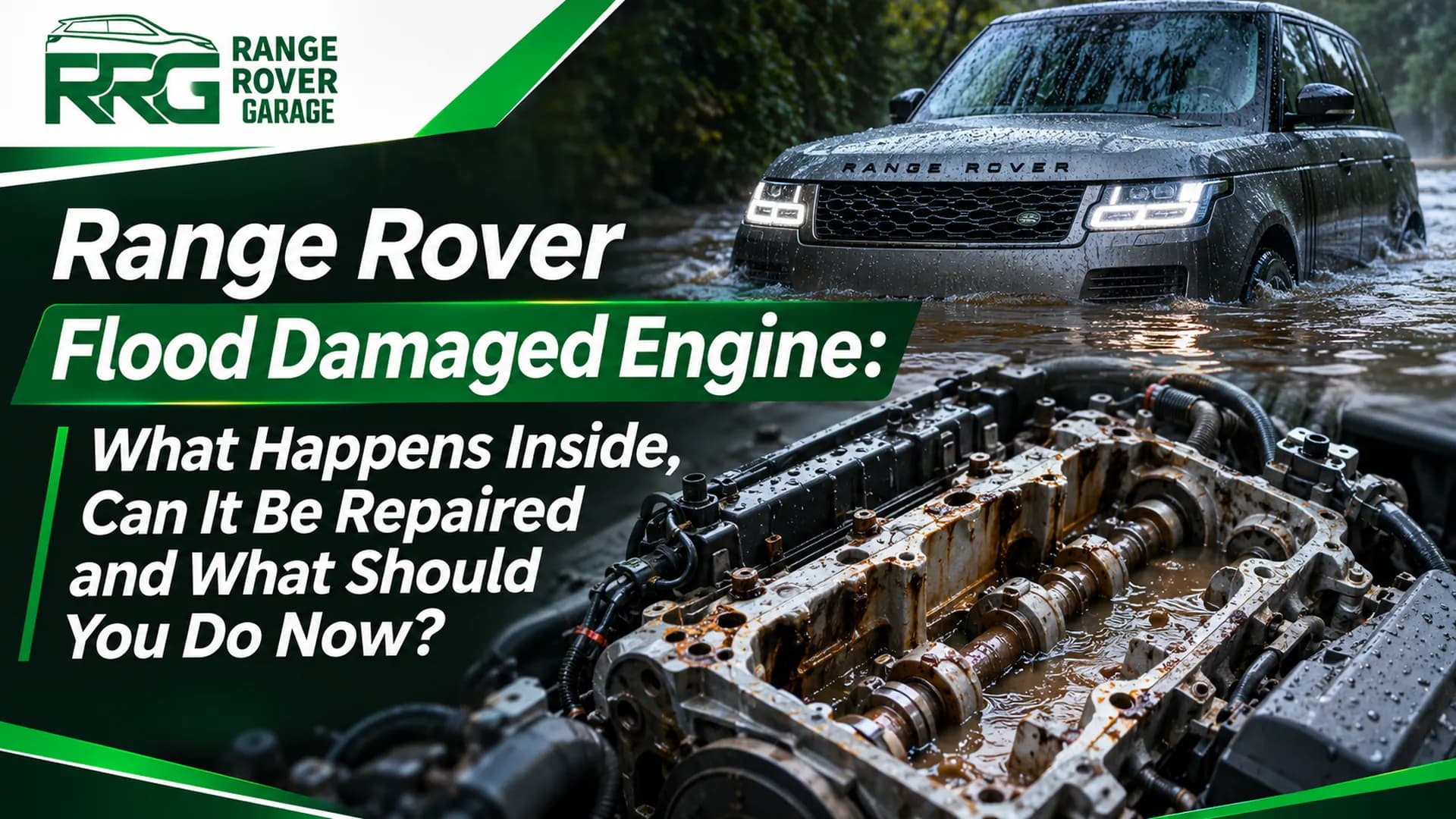
The engine has just died in deep water, or the car won't start after you've driven through a flooded road. Your first instinct is to turn the key again. Don't.
Do not try to restart a Range Rover that has taken in water. If floodwater has reached the cylinders, cranking the engine can bend connecting rods, crack pistons and turn a recoverable situation into a destroyed engine. Water can't be compressed, so something has to give, and it's usually the metal.
This guide explains how water damages a Range Rover engine, how a flood damaged engine is diagnosed, whether it can be repaired, rebuilt or replaced, and how to get it inspected. If your car has been through floodwater and you're unsure what to do next, you can request an engine inspection from Range Rover Garage with your model, engine and a short description of what happened.
What Happens When a Range Rover Engine Gets Flooded, and What Should You Do Straight Away?
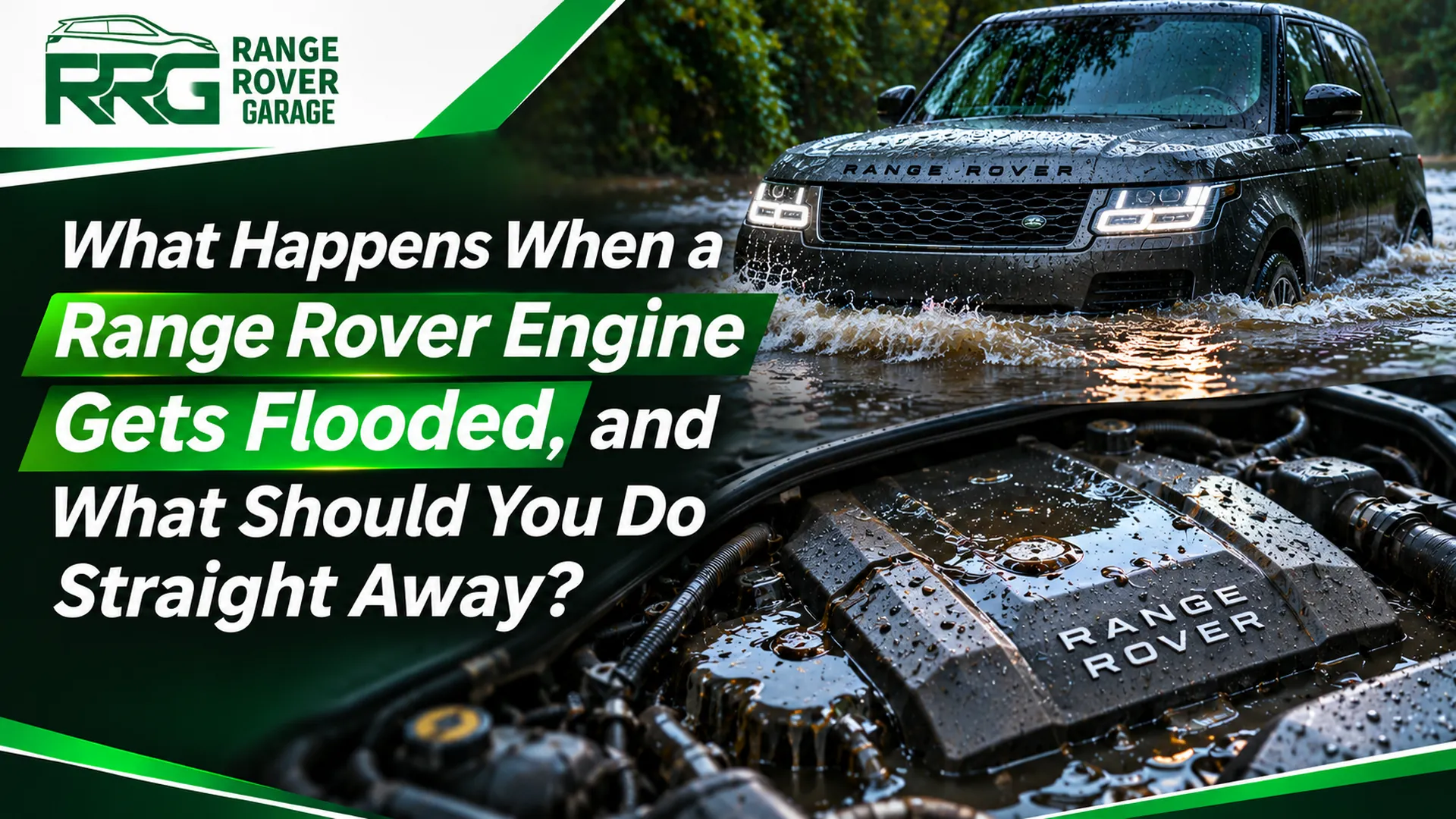
When a Range Rover engine is flooded, water enters the air intake and travels towards the combustion chambers. If enough reaches the cylinders, the pistons can't complete their stroke, and the engine locks up. This is called hydrolock, or hydrostatic lock.
Many Range Rover owners assume the car's wading ability makes it immune. It doesn't. Wading depth is a design limit measured under specific conditions. Moving water, bow waves from other vehicles, a hot engine and a low intake position all change the risk.
How Does Water Get Into a Range Rover Engine, and Why Is Hydrolock So Damaging?
Water enters a Range Rover engine mainly through the air intake, reaches the combustion chambers and, because it can't be compressed, stops the piston mid-stroke and can bend connecting rods or damage pistons, bearings and the crankshaft. The force of the engine's momentum has nowhere to go but into the internal components.
Water doesn't only arrive from outside, and the route matters. These are the main ways water ends up inside an engine:
- External floodwater drawn through the air intake. The classic flood damage scenario, usually after driving through deep or fast-moving water.
- A damaged intake system. Split or disconnected pipework around the turbocharger, intercooler and air filter housing can let water in.
- Coolant leaking into the cylinders. A failed head gasket or cracked component can push coolant where it doesn't belong.
- A failed internal coolant crossover pipe. This has been reported as a concern on some engines, and it should be checked against your specific engine rather than assumed.
- Water contaminating the engine oil. Water can enter through breathers or seals, or through prolonged submersion.
Why does this distinction matter? Because not every water-related engine failure is flood damage. A hydrolocked engine after a flood and an engine with coolant entering the cylinders can look similar on the surface but need different repairs.
There's also a difference between an engine that has flooded and one that has hydrolocked. A flooded engine has taken in water. A hydrolocked engine has locked because water filled a cylinder. The first may be recoverable with careful inspection and cleaning, and the second usually means internal damage.
If your Range Rover has been in floodwater, follow this simple checklist:
- Don't restart the engine. Not even once to see what happens.
- Don't keep cranking. Each attempt can push more water into the cylinders.
- Don't drive it out under its own power. Have it recovered on a flatbed or trailer.
- Disconnect the battery if it's safe to do so. This reduces the risk of electrical damage.
- Photograph the water level and surroundings. This helps with insurance.
- Contact your insurer. Do this before authorising any repairs.
- Arrange an inspection before any start attempt. A specialist checks the engine properly first.
If you need help getting the car off the road safely, our vehicle recovery team can advise.
Worried your engine has taken in water? Request an engine inspection and we'll explain what to check and what to expect.Book an engine inspection
What Are the Signs of a Flood Damaged Range Rover Engine, and Do All Engines Fail the Same Way?
A flood damaged Range Rover engine typically won't start, cranks and stops abruptly, stalls in water or makes knocking noises, and the oil may look milky. Some signs appear immediately, while others only show up on inspection.
Watch for these symptoms:
- The engine won't start after flooding. Or it cranks for a moment and stops dead, which suggests a cylinder is full of water.
- Stalling or sudden power loss in water. The engine cuts out as water reaches the intake.
- Knocking sounds. A bent connecting rod or damaged piston can produce a heavy knock.
- Milky or contaminated engine oil. Check the dipstick and oil filler cap for a pale, creamy or frothy appearance.
- Water in the air intake system. Visible moisture in the air filter housing or intake pipes.
- Warning lights. Engine management, gearbox and electrical warnings after water exposure.
- Abnormal smoke. White smoke can indicate water or coolant in the combustion chambers.
- Electrical faults. Flickering lights, dead sensors or intermittent faults can point to corroded connectors or a water-damaged ECU.
Different engines respond differently, and they shouldn't be treated as interchangeable. A 3.0 TDV6 or SDV6 diesel, a 3.0 Ingenium diesel, a 4.4 SDV8 diesel, a 4.4 petrol V8, a 5.0 supercharged V8 and a 2.0 Ingenium engine each have different intake layouts, internal components and failure patterns. Model generations such as the L322, L405 and L460 Range Rover, the Range Rover Sport L320, L494 and L461, and the Velar and Evoque vary too.
That's why only a proper inspection confirms what has happened inside your engine. A symptom list can point you in the right direction, but it can't replace testing.
How Do Mechanics Diagnose Water Damage, and Can a Flooded Range Rover Engine Be Repaired?
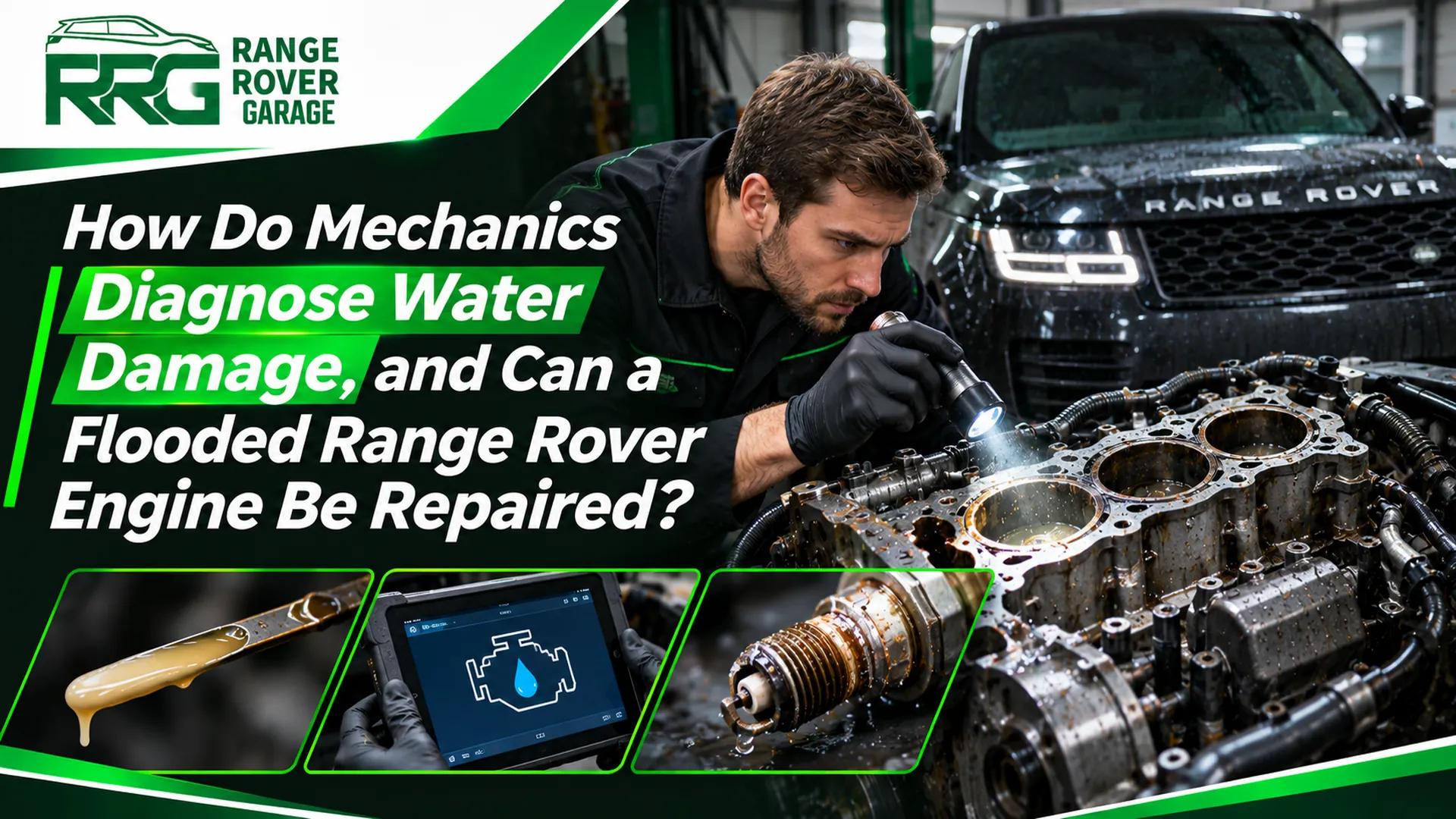
Many people assume a flooded engine is automatically scrap. Sometimes it is. Often, though, the extent of the damage is far less clear until the engine has been properly examined. That's what a specialist inspection is for.
How Is a Flood Damaged Range Rover Engine Inspected Before Any Repair Decision?
A proper inspection follows a clear sequence, from checking whether water entered the intake to testing the cylinders and, where needed, stripping the engine, before anyone recommends a repair. The steps below show how a transparent process works:
- Initial vehicle inspection. We look at the water level the car experienced, how long it stood and whether it was started afterwards.
- Confirming whether water entered the intake. Checking the air filter housing, intake pipework and intercooler for moisture.
- Checking engine oil and other fluids. A water-contaminated oil sample is a strong indicator of ingress.
- Electronic fault code scanning. Reading the ECU fault memory shows electrical and sensor problems.
- Compression and leak-down testing. These tests assess how well each cylinder seals, and can reveal bent rods, damaged pistons or valve problems.
- Borescope inspection. A small camera is passed into the cylinders to look for scoring, water and visible damage.
- Internal strip-down where needed. If tests suggest damage, the engine is dismantled for a full assessment.
- Identifying damaged components. Connecting rods, pistons, bearings, the crankshaft, cylinder head and block are examined.
- Preparing an itemised quotation. You see what's damaged, what needs replacing and what the options are.
One important rule: the engine shouldn't be turned over by the starter, or even by hand, until it's been checked. A turn that would be harmless on a healthy engine can bend a rod on a hydrolocked one.
Water damage doesn't stop at the engine. The electrics, ECU, wiring harness, sensors, turbocharger, intercooler, gearbox and differentials can all be affected by submersion, so a thorough assessment covers more than the engine bay.
Can a Hydrolocked Range Rover Engine Be Rebuilt, or Does It Need Replacing?
Sometimes a hydrolocked Range Rover engine can be repaired or rebuilt, and sometimes replacement is the sensible route. The answer comes from inspection, not guesswork. If the block, crankshaft and cylinder head are sound, a rebuild may be possible. If damage is widespread, a replacement can be the better option.
Option | What it involves | Best suited to |
| Inspection only | Testing to confirm whether damage exists | Water exposure with no confirmed internal damage |
| Repair or partial rebuild | Replacing damaged parts such as rods, pistons or bearings | Limited damage with a sound block and crankshaft |
| Full rebuild or reconditioning | Complete strip-down and rebuild to specification | Wider internal damage where the core is salvageable |
| Reconditioned replacement engine | A rebuilt engine supplied and fitted | Severe damage, or where a warranted unit is the practical answer |
| Used replacement engine | A second-hand engine, with history and condition to check | Budget-led decisions, with the risks understood |
Before you accept any replacement engine, ask what warranty applies, whether fitting is included, what has been replaced or tested, and what the engine's history is. A used engine can be a fair choice, but its condition varies, so find out what has been checked.
A genuine workshop example here makes this concrete: a removed bent connecting rod, a milky oil sample or a borescope image showing the inside of a cylinder. Seeing the actual damage helps owners understand why inspection matters.
Need to know whether your engine can be saved? Book an engine inspection and get a clear assessment before you decide.
How Much Does Flood Damaged Engine Repair Cost, and Does Insurance Cover It?
Cost is one of the first questions owners ask, and it's one of the hardest to answer without seeing the engine. A flood damaged Range Rover could have a minor intake problem or a completely wrecked engine. Anyone quoting a fixed figure over the phone is guessing.
What we can do is explain what shapes the final quote, so you can judge any estimate fairly.
What Affects the Cost of Repairing or Replacing a Flooded Range Rover Engine?
The cost of flood damaged engine repair depends on the engine and model, how far the water travelled, which components were damaged and whether the original engine can be rebuilt. These are the main drivers:
- The engine and model. A 2.0 Ingenium, a 3.0 diesel V6 and a 5.0 supercharged V8 are very different jobs.
- How far the water travelled and what it damaged. Water in the intake is one thing. Bent rods and a damaged crankshaft are another.
- Inspection and strip-down time. Diagnosing the extent of damage takes testing and labour.
- Parts needed. Pistons, rods, bearings, gaskets and seals, or a complete replacement engine.
- Labour. Access and complexity vary by model.
- Rebuild versus reconditioned or used engine. Each route has different parts and warranty implications.
- Fitting. Whether fitting is included in the quote.
- Electrical repairs. Corroded connectors, damaged sensors or a water-damaged ECU can add to the work.
- Warranty terms. Cover varies between rebuilt, reconditioned and used engines.
Ask for an itemised quotation that separates inspection, parts, labour and fitting. A single lump sum hides where the money goes. And be wary of a cheap quote that skips inspection. If the problem is bigger than expected, it often turns into a larger bill later.
What about insurance? Here's the general picture, though you should always confirm details with your own insurer:
- Comprehensive cover often includes flood damage. But terms vary, so check your policy and contact the insurer before authorising any repairs.
- Insurers may assess whether the vehicle is repairable or should be written off. Write-off categories affect resale value and registration, so check current official guidance for what each category means.
- Ask whether your insurer will accept a specialist's inspection report. A detailed report can help support the claim and the repair decision.
Policy terms differ, so read your documents carefully and speak to your insurer. We can provide a clear inspection report that explains what was found.
Ready to find out what your Range Rover needs? Request an engine repair quotation with your details.
Why Choose a Range Rover Engine Specialist, and How Do You Get Your Engine Inspected?
Flood damage rewards specialist knowledge. The engines differ, the intakes differ, the electronics are complex and a wrong guess is expensive. A Range Rover engine specialist knows these engines, has the right diagnostic equipment and can explain what's wrong in plain language.
What Should You Ask Before Booking Flood Damage Engine Repair, and Is a Flooded Range Rover Worth Buying?
Ask whether the engine will be inspected before any decision is made, and whether the quote is itemised. Those two questions tell you a great deal about how a garage works.
Use this checklist before you agree to any work:
- Will the engine be inspected before a repair decision? Not just assumed to be beyond saving.
- Is the quote itemised? Inspection, parts, labour and fitting shown separately.
- Is the replacement engine reconditioned or used? And what warranty applies?
- Is fitting included?
- How are the electrics checked? ECU, wiring, sensors and connectors matter after water exposure.
- What happens if more damage is found? Ask how changes to the quote are handled.
- How long will the car be off the road?
To get an accurate answer from Range Rover Garage, have these details ready:
- The model, year and engine
- What happened, and how deep the water was
- How long the car stood in water
- Whether the engine was started afterwards
- Any warning lights or noises
- Photos of the vehicle, the intake and the oil
Thinking of buying a Range Rover that may have been flooded? Look for these warning signs:
- A damp or musty smell inside the cabin
- Water lines, silt or staining under carpets and in the boot
- Corroded electrical connectors
- Contaminated or milky engine oil
- A vehicle history check that shows insurance write-off records
- Unexplained electrical faults
If you're unsure, have the car inspected independently before you buy. A flooded vehicle that has been cleaned up can hide serious problems.
For more detail, see our pages on Range Rover engine rebuild, reconditioned Range Rover engines, engine replacement and engine diagnostics. If a fuel system fault is part of your problem, our guide to Range Rover injector replacement cost explains what to expect.
Contact Range Rover Garage today and request your engine inspection or repair quotation.
Range Rover Flood Damaged Engine FAQs
What happens when a Range Rover engine gets flooded?
Water enters the air intake and can reach the cylinders. Because water can't be compressed, it can stop the pistons and bend connecting rods, causing hydrolock and internal damage.
What are the symptoms of a flood damaged Range Rover engine?
Common signs include the engine not starting, stalling in water, knocking noises, milky oil, water in the intake, warning lights and electrical faults.
Can a flood damaged Range Rover engine be repaired?
Sometimes. If the damage is limited and the block and crankshaft are sound, repair or rebuild may be possible. Inspection confirms the answer.
Can a hydrolocked Range Rover engine be rebuilt?
Often yes, depending on the extent of the damage. A rebuild replaces damaged components, while severe damage may mean replacement is the better route.
Can you start a Range Rover after driving through floodwater?
No. If water has entered the engine, starting or cranking it can cause serious damage. Have it inspected first.
Why won't my Range Rover start after driving through water?
Water may have entered the cylinders and locked the engine, or electrical components may be affected. Don't keep trying to start it.
How do you check Range Rover engine oil for water?
Look at the dipstick and oil filler cap for a milky, creamy or frothy appearance. A proper oil sample test gives a clearer answer.
How do mechanics check for water inside an engine?
They inspect the intake and fluids, scan fault codes, run compression and leak-down tests and use a borescope to look inside the cylinders.
Should I disconnect the battery after flood damage?
If it's safe to do so, it can reduce the risk of electrical damage. Never put yourself at risk, and seek advice if you're unsure.
Should you rebuild or replace a flooded engine?
It depends on what inspection finds. Limited damage can often be rebuilt, while widespread damage may make a reconditioned replacement more practical.
Does insurance cover Range Rover flood damage?
Comprehensive cover often includes flood damage, but terms vary. Check your policy and contact your insurer before authorising repairs.
How long does flood damaged engine repair take?
It depends on the engine, the extent of damage and parts availability. A garage can give a realistic estimate after inspection.
Can water damage a Range Rover turbocharger or ECU?
Yes. Water can affect the turbocharger, intercooler, wiring, sensors and ECU, so a full assessment covers more than the engine itself.
How do I check whether a used Range Rover has flood damage?
Check for damp smells, water lines, silt, corroded connectors and contaminated oil, run a vehicle history check and arrange an independent inspection.
Get Your Range Rover Inspected Before You Decide
A flood damaged Range Rover engine isn't always a lost cause, but it only stays recoverable if it's treated carefully from the first minute. Don't restart it, get it recovered and have it inspected properly before any repair decision is made.
At Range Rover Garage, we inspect first, explain what we find and give you an itemised quotation before work begins. You get honest advice on whether to repair, rebuild or replace, and a clear picture of your options.
Contact Range Rover Garage today to book your Range Rover flood damaged engine inspection.