Reconditioned TDV6 Engines: Supply & Fit UK | Range Rover Garage
Your Land Rover starts knocking, the oil pressure light flickers, or the engine goes quiet and won't turn over. The question that follows is always the same: repair it, replace it, or walk away?
If you own a Discovery, Range Rover Sport or Range Rover with a diesel V6, a failing TDV6 engine doesn't have to mean scrapping the vehicle. A reconditioned TDV6 engine, properly built, tested and fitted by a specialist, is often the most sensible way to bring it back to life.
At Range Rover Garage, we supply and fit reconditioned 2.7 and 3.0 TDV6 engines across the UK, backed. This guide explains how to identify your engine, tell whether it really needs replacing, compare your options, and understand what supply and fit involves.
Want a price now? Enter your registration for a free TDV6 engine quote.
What Is a TDV6 Engine and Which Land Rover Models Use the 2.7 or 3.0 TDV6?
The TDV6 is a turbocharged, direct-injection diesel V6 engine, developed from the Ford-PSA diesel V6 family and used across Land Rover and Jaguar vehicles. It comes in two main versions: the 2.7-litre TDV6 and the 3.0-litre TDV6. The 3.0 is also badged SDV6 in higher-output forms, including twin-turbo setups.
Land Rover chose it for smooth, torque-rich power that suits heavy 4x4s towing, off-roading and covering long motorway miles.
Which Vehicles Use Each Version?
The table below gives the general picture. Treat it as a starting point, because exact fitment depends on model year and market.
Feature | 2.7 TDV6 | 3.0 TDV6 / SDV6 |
| Capacity | 2.7 litres | 3.0 litres (2993cc) |
| Typical engine code | 276DT | 306DT (30DDTX on some applications) |
| Typical Land Rover applications | Discovery 3, early Range Rover Sport (L320) | Discovery 4, Range Rover Sport (L320 and L494), Range Rover (L405), Discovery 5 |
| Typical Jaguar applications | XF, XJ and earlier diesel models | XF, XJ, F-PACE |
| Turbocharging | Single or sequential turbo, depending on variant | Single or twin turbo, depending on output |
| Reputation | Established, widely understood engine | More power and torque, with bearing and oil-pressure concerns on some units |
The two are not interchangeable. A 2.7 does not simply swap into a 3.0 vehicle, and even within the 3.0 range, output and ancillaries differ between models.
How Do I Identify My TDV6 Engine Code (276DT or 306DT) Before Buying a Replacement?
Matching the right engine to your vehicle is the most important step in any replacement. The wrong unit can mean mismatched ancillaries, ECU problems and wasted money.
Three things determine the correct match:
- Engine code: usually stamped on the block or listed in your vehicle documentation.
- Model year and vehicle generation: a Discovery 4 and a Discovery 5 can both carry a 3.0 diesel, but they are not the same installation.
- VIN: the most reliable way to confirm exactly what left the factory.
Be careful with the TDV6 and SDV6 badges. They don't always tell you which engine variant sits under the bonnet, so don't rely on the badge alone. Check the code and the VIN.
If you're unsure, send us your registration and we'll confirm compatibility for free before you commit to anything.
How Do I Know If My TDV6 Engine Needs Replacing, and Is a Reconditioned Engine Worth It?
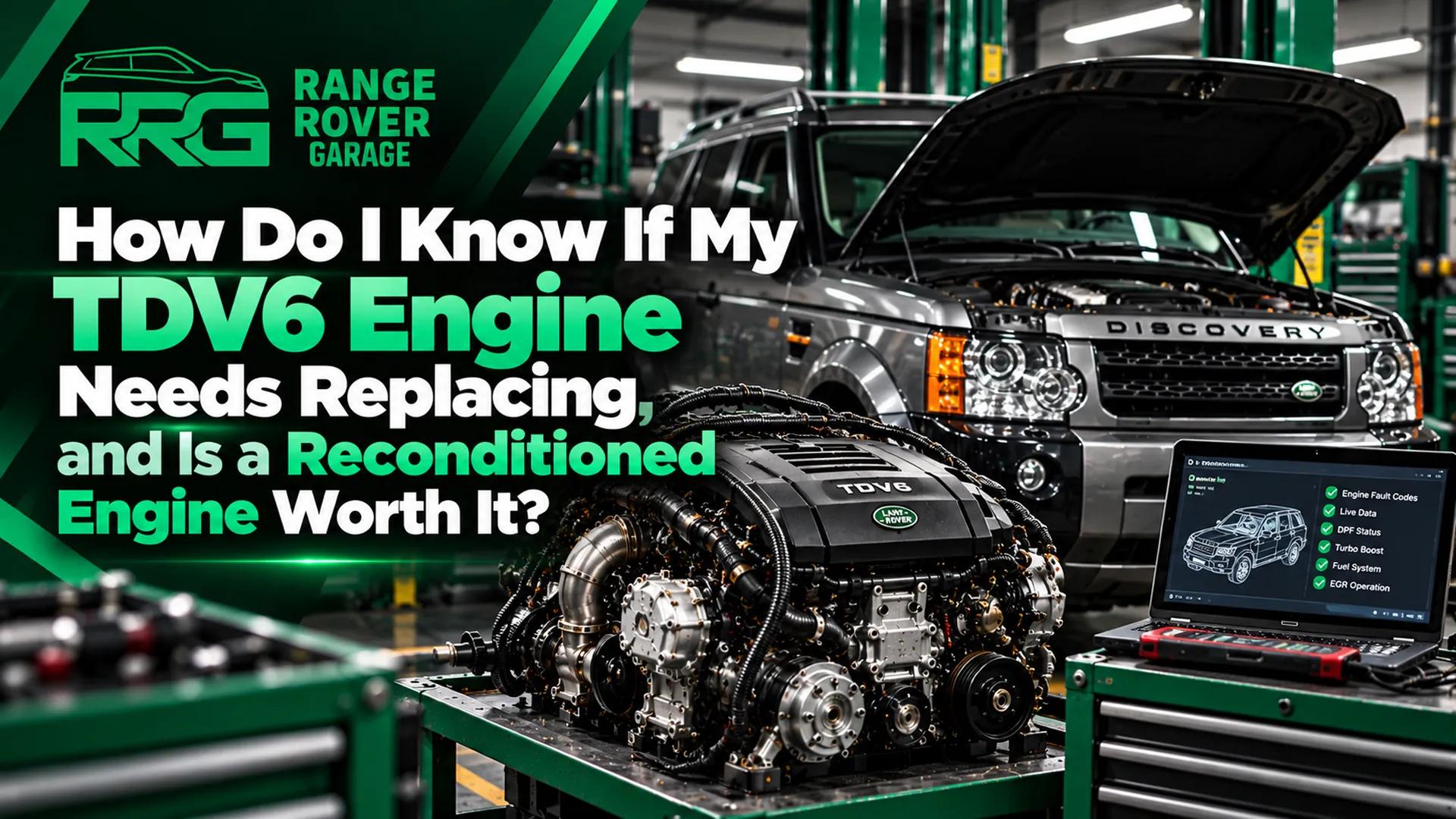
Not every fault means a new engine. Many TDV6 problems are repairable: a sticking EGR valve, a tired turbo, a clogged DPF or a leaking injector. The skill is separating a repairable fault from terminal damage.
A simple rule: repair when the damage is limited to external or bolt-on components, and replace when the bottom end is compromised. Once metal has circulated through the oil system, repair costs climb quickly and reliability drops.
What Causes TDV6 Crankshaft Bearing Failure, Low Oil Pressure and Engine Knocking?
These three symptoms often arrive together, and they are the ones to take seriously. Crankshaft and main bearing failure is one of the most widely reported problems on the 3.0 (306DT) family, though it can affect other TDV6 engines too.
Here is how common symptoms usually map to causes:
- Deep knocking from the lower engine: worn or failed crankshaft or connecting rod bearings, often linked to oil starvation.
- Oil pressure warning light: a worn oil pump, blocked pickup, bearing wear, or low oil level.
- Loss of power: a failing turbo, blocked DPF, injector faults or EGR problems.
- Smoke: blue points to oil burning, black to over-fuelling or a restricted intake, white to coolant or fuel issues.
- Rattling on start-up: often timing chain wear or tensioner trouble.
These symptoms overlap, so a proper diagnosis matters. Compression testing, pressure testing, leak-down testing and a diagnostic scan will pinpoint the cause far better than guesswork. Skipping this step is how owners end up replacing parts that were never the problem.
Stop driving if you hear a deep knock, see the oil pressure light stay on, or notice metal in the oil. Driving even a short distance with bearing damage can turn a repairable engine into a scrapped one.
A typical case is an owner who ignores a brief oil pressure flicker for a few weeks. By the time the knock starts, the crankshaft is scored and the block is beyond economical repair. Acting early often saves the core engine, which keeps costs lower.
Reconditioned vs Used vs Rebuilt TDV6 Engine: Which Is the Best Option?
Once you know the engine needs replacing, you have four routes. Each balances price, risk and peace of mind differently.
Engine type | Condition | History | Warranty | Price | Risk |
| Used TDV6 | Taken from a donor vehicle | Often unknown | Limited | Lowest | Higher |
| Reconditioned TDV6 | Stripped, inspected, worn parts replaced, tested | Documented process | Stronger | Mid-range | Lower |
| Rebuilt TDV6 | Extensive rebuild with machining and new internals | Documented | Strong | Mid to high | Low |
| New OEM engine | Brand new | Factory | Strong | Highest | Lowest |
Who should choose what?
- Used: suits a tight budget or an older vehicle, but you inherit someone else's wear and the unknowns.
- Reconditioned: the usual middle ground for most owners. You get inspected, refreshed internals and warranty cover at a fraction of new-engine pricing.
- Rebuilt: the better choice when the core engine needs deeper work, such as machining or crankshaft attention.
- New OEM: worthwhile for a high-value vehicle you plan to keep for years, if the budget allows.
For most Discovery and Range Rover Sport owners weighing a high-mileage vehicle against a sensible repair bill, reconditioned wins on value.
What Is Included in Our Reconditioned TDV6 Engines?
A reconditioned engine is only as good as the work behind it. Our process covers:
- Full strip-down and cleaning
- Block and cylinder head inspection and pressure testing
- Crankshaft inspection and machining where required
- Bearing replacement
- Oil pump, seals and gaskets
- Timing chain, tensioner and related components
- Injector and turbocharger assessment
- Bench testing and final quality inspection
Ask any supplier for this list in writing. If they can't explain what "reconditioned" means in their workshop, that tells you what you need to know.
How Does TDV6 Engine Supply and Fit Work, and What Does It Cost in the UK?
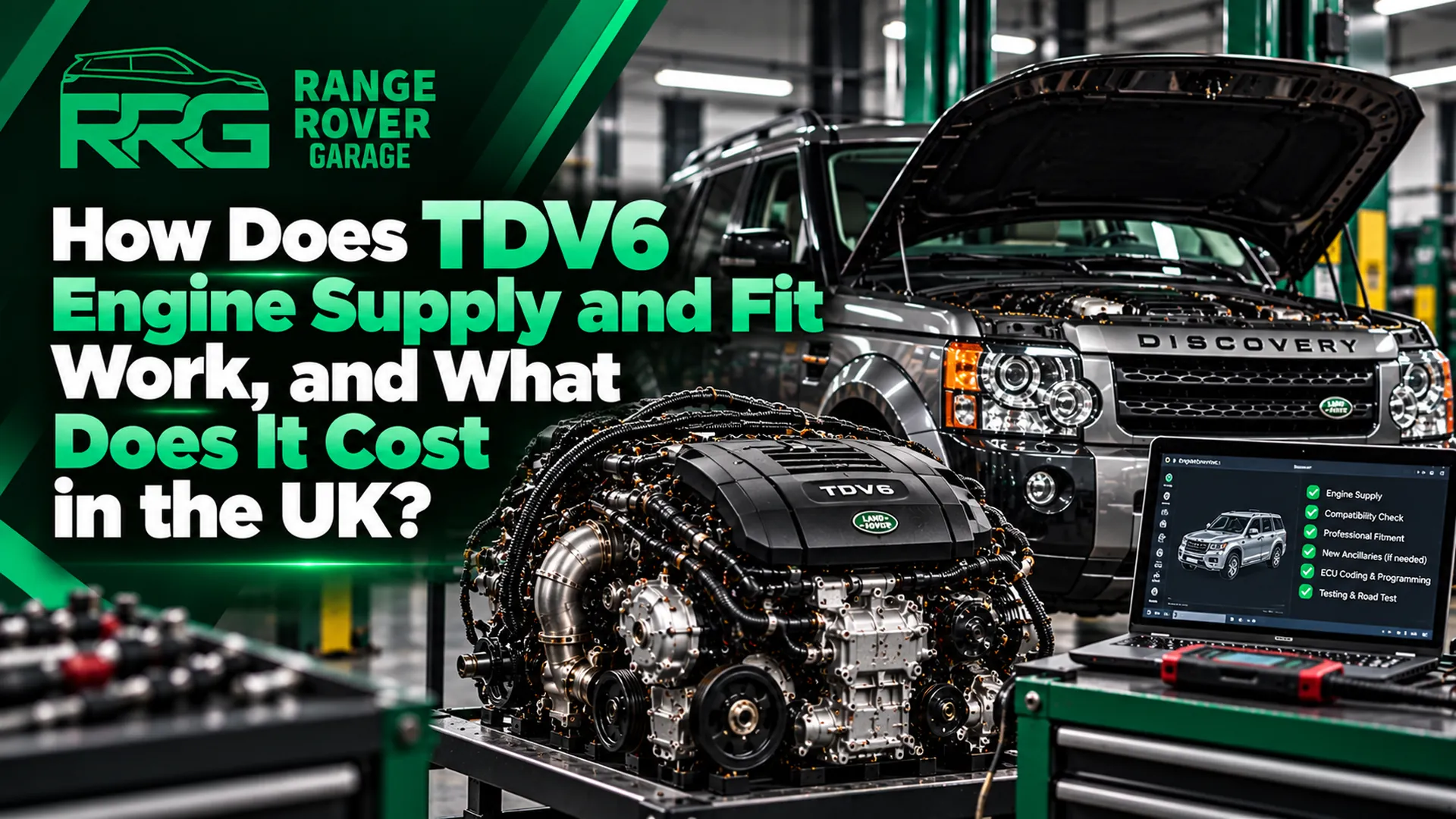
Supply and fit means one team handles the whole job: finding the right engine, delivering it, removing the old unit, installing the replacement and testing the result. You deal with one point of contact and one warranty.
Here is how the process works:
- Vehicle assessment: we check symptoms, history and condition.
- Engine identification: we match the correct unit using your registration, engine code and VIN.
- Quote: you receive a clear price covering engine, labour and fitting.
- Engine sourcing: the reconditioned unit is prepared or selected.
- Delivery: the engine arrives at the workshop.
- Engine removal: the failed engine comes out.
- Ancillary inspection: we check the turbo, injectors, EGR, DPF, oil cooler and related parts, because fitting a fresh engine to a contaminated oil system invites repeat failure.
- Installation: the new unit goes in.
- ECU diagnostics: we scan and clear faults, and check the engine management.
- Road test: the vehicle is driven and rechecked.
- Warranty and aftercare: you receive your paperwork and warranty terms.
Step 7 is the one cheap quotes often skip. Replacing an engine without cleaning or replacing contaminated oil-system components is a common cause of early repeat failures.
How Much Does a Reconditioned TDV6 Engine Replacement Cost in the UK?
The honest answer is that it depends. The main cost drivers are:
- Engine version: 2.7 or 3.0, and the specific variant.
- Engine type: used, reconditioned, rebuilt or new.
- Condition of the old engine: this affects whether it can be used as an exchange core.
- Labour: removal and installation on a Land Rover diesel V6 is not a quick job.
- Ancillary parts: turbo, injectors, coolers, hoses, filters, fluids and gaskets.
- Vehicle model: access and complexity vary between a Discovery and a Range Rover.
Be wary of any quote far below the market. A suspiciously low price usually means an unrecorded rebuild, no ancillary checks or a thin warranty.
What Warranty Comes With a Reconditioned TDV6 Engine?
A warranty is the clearest sign a supplier stands behind the work. Ours covers:
Read the exclusions before you buy. Most warranties require correct servicing, the right oil and a properly fitted unit. We would rather explain these terms upfront than surprise you later.
Whether you're near our workshop or hundreds of miles away, send your registration and we'll confirm what's possible for your location.
Get your free supply and fit quote: enter your registration, call or complete the enquiry form.
TDV6 Engine FAQs
How long does TDV6 engine replacement take?
It varies with the vehicle, parts availability and what else needs attention. Our typical turnaround. Hidden damage found during removal can extend this, and we'll tell you if it does.
How long does a TDV6 engine last?
With regular oil changes using the correct specification and prompt attention to warning signs, many TDV6 engines last well beyond 100,000 miles. Neglected servicing and ignored oil pressure warnings are the main reasons they don't.
Is the 3.0 TDV6 reliable?
It's a capable engine with real strengths, but crankshaft bearing wear and oil-pressure issues are widely reported on some units. Maintenance history matters a great deal, which is why we recommend a full inspection before buying any used 3.0.
What's the difference between TDV6 and SDV6?
Both names are associated with the 3.0 diesel V6, and SDV6 usually refers to higher-output versions, often with twin turbos. Compatibility depends on engine code, vehicle generation and VIN, so never assume they're interchangeable.
Can I fit a used engine instead of a reconditioned one?
Yes, and it suits some budgets. The trade-off is unknown history, shorter warranty cover and higher risk of repeat problems. We're happy to talk through your options.
How do I know if my TDV6 needs replacing?
Deep knocking, a persistent oil pressure warning, metal in the oil, or low compression usually point to serious internal damage. A compression test and oil inspection will confirm it.
Final Thoughts: Get Your TDV6 Back on the Road
A failing TDV6 is stressful, but it isn't the end of your Land Rover. Identify the correct engine code, diagnose the fault properly, and choose between used, reconditioned or rebuilt based on your budget and how long you plan to keep the vehicle. Then insist on a supplier who explains the process, checks the ancillaries and puts the warranty in writing.
That's how we work at Range Rover Garage, from the first registration check through to the road test.
Ready to move forward? Enter your registration for a free quote, or call to speak with a specialist who knows these engines.